


It’s now coming up on a year since the expiration of the General System of Preferences (GSP) program on July 31, 2013. GSP offers duty-free treatment upon entry to certain goods of certain countries to help with their economic development. In past years, the renewal of GSP has been a contentious issue with the House of Representatives seeking an added revenue offset to make up for the lost duties collected. When GSP has expired in the past, it has been renewed in weeks or months, and always retroactively. For the first time, though, GSP has been gone so long that Customs entries are starting to liquidate, and importers are worried that they are being deprived of an opportunity to claim them retroactively. This is because by law, entries liquidate 314 days after the date of entry. There was a push and recommendation from the NCBFAA and others that perhaps importers should file protests to protect their right of recovery. On May 16th, CBP issued a notice saying that protests would be ineffective, and it really requires Congress to renew GSP with the retroactive provision. The President announced his intention to remove Russia from the list of GSP beneficiary countries, a move seen to help advance the discussion since Russia represents a little over $16 million in benefits annually. If you are interested in what you can do to try and help renew GSP, we suggest speaking to your industry’s trade association and see if they have a coordinated program. Otherwise, there is a coalition of companies who work under the banner of the Coalition to Renew GSP at their website, Renew GSP Today.
Crude oil accidents by rail demand policy review
On April 30th, a CSX freight train from Chicago with tank cars carrying crude oil derailed and caused a massive explosion in Lynchburg, Virginia, a little under two hundred miles from Norfolk where we are located. Fortunately, there were no fatalities. The accident, the CSX’s second involving oil in 2014 (they had a derailment in Philadelphia in January), adds to a growing count of derailments in North America raising questions about the safety and regulations governing the shipment of crude oil. The deadliest of the recent spate of accidents occurred last July in Canada where forty-seven people lost their lives. Increasing production leads to more shipping Much of the oil being moved around the United States for export comes from the Bakken fields in North Dakota, and the first thing to know is that not all “oil” is the same. Depending upon the methods used for extraction and where it was located, not all oil is of the same economic impact or density. Some oil floats on water, other oil sinks to the bottoms of bodies of water such as lakes, rivers and oceans. The derailment in Lynchburg saw oil get into the James River, the economic and environmental impact of which won’t be fully known for a while. The Pipeline and Hazardous Materials Safety Administration (part of the DOT) is investigating and working with private industry to better understand what is being carried and how to make recommendations that protect shippers and the environment. Authorities changing regulations There are a number of steps that regulatory bodies in the US and Canada are taking to try to improve safety, including requiring older tank cars to be replaced with newer, more robust ones. Canadian authorities mandated this change already. It isn’t just oil that is moved by trains that can reach a mile in length and pass close to or through residential areas, but all kinds of hazardous materials and chemicals. Watch a train go by a crossing and look for either a placard and/or a UN number. Both of these will tell you what is traveling in that tank rolling past you.
What are the Centers of Excellence and Expertise?
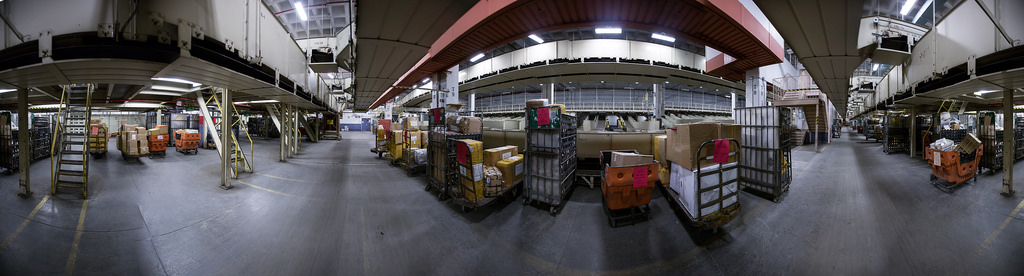
Two weeks ago, Customs and Border Protection participated in the NCBFAA’s Annual Conference. They were present and engaged in a variety of panels discussing changes to the regulations that govern Customs brokers as well as the impending delivery and arrival of the Automated Commercial Environment, or ACE, the way that entries will be processed in the future. What was among the most interesting topics is Customs’ effort to centralize their knowledge and processing for ten industries who represent, by value and importance, the largest share of imports into the United States. The Centers of Excellence and Expertise (CEE’s) are scattered geographically across the United States. There are ten of them, covering commodities ranging from drugs to petroleum to textiles to electronics, base metals, agriculture and several others. The CEE’s are both physical in that they have a city in which they operate as well as virtual, because they draw from knowledge not just in the physical location, but virtually through connections to import specialists and the national import specialists for the merchandise in question. Presently, companies can volunteer to have their entries processed through a CEE, and with the increased deployment of ACE, it will be easier for Customs to move information around in their system to transfer data from a port of entry where the data is submitted to a CEE located in another port for review and release. CBP announced that they plan to start notifying imports of their inclusion in the CEE, and summary review for liquidation will not happen locally, but will happen remotely. Customs’ view is that their workflow (and importers’ supply chains) are now distributed across a wider geography, but things are controlled from a single point. CBP envisions migrating their processing to a similar process with a goal to reducing port-level discrepancies in processing and working across an industry to prevent fraudulent activity such as intellectual property rights violations or counterfeit pharmaceuticals. To learn more about CEE’s, what commodities are covered and CBP’s plans for them, you can visit a portion of their website dedicated to the program.
Vancouver truckers back to work (with some good ideas for Hampton Roads).
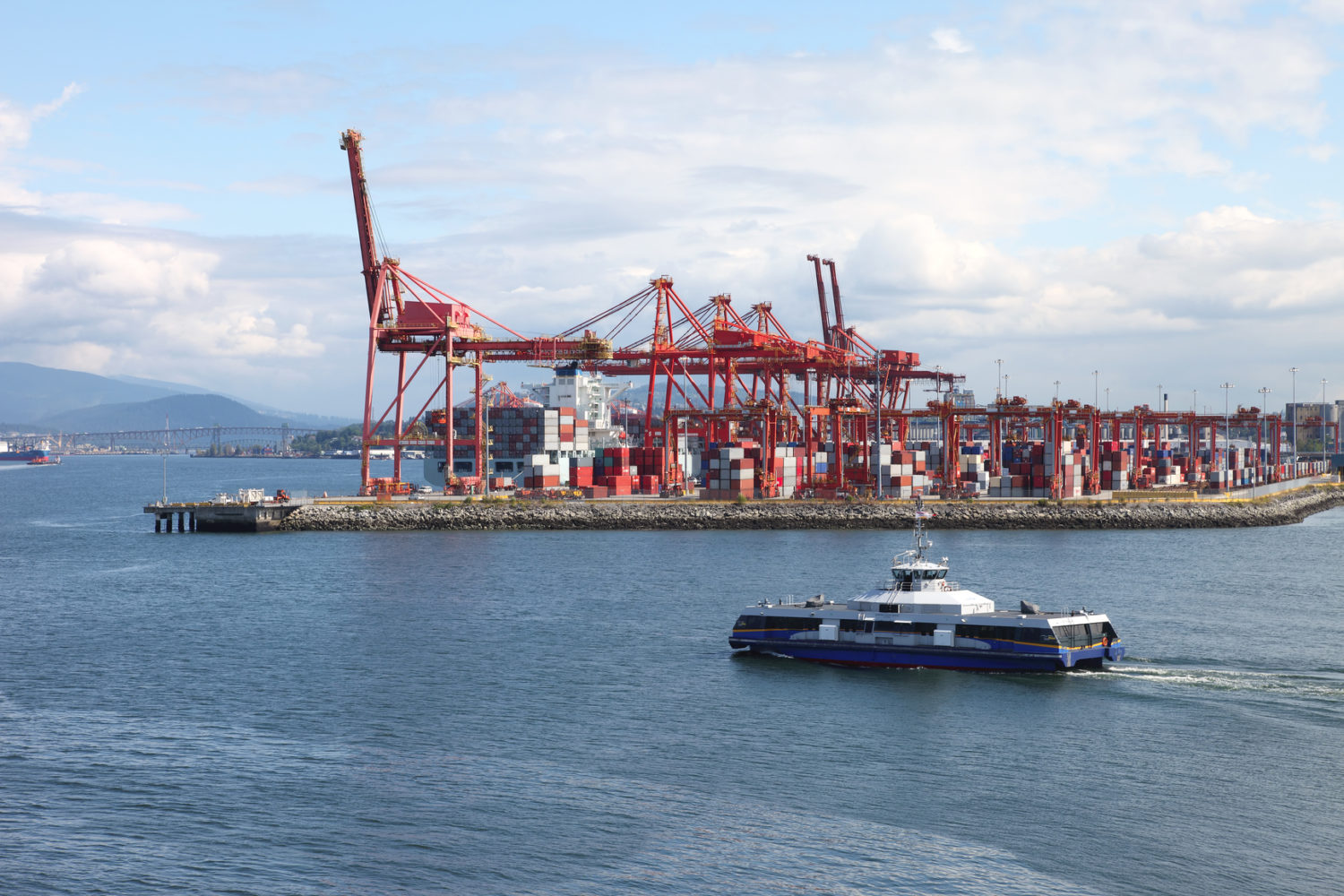
As we wrote about here a few weeks ago, Hampton Roads is looking into ways to better handle truck congestion and terminal activity in a bid to improve productivity and the relations between longshore labor and the truckers who pick up and drop off containers at the port. For six long and painful weeks for Port Metro Vancouver, truckers struck the terminal. The majority of the affected cargo was for local pickups and deliveries, as well as transloads that took place for commodities such as lumber and paper. For shippers and consignees at inland destinations whose cargo came and went via rail, the impact was minimal. Terminals and carriers declared force majeure and began diverting containers to other ports in the Pacific Northwest. This left shippers to foot the bill and make arrangements to move their containers from the US across the border for delivery. Several of the key components of a fourteen point plan agreed to by both sides hinge on performance improvements at the terminals (tiered penalties for terminals taking more than ninety minutes to complete a truck transaction), and compensation for the truckers if those improvements are not forthcoming. The federal government is going to increase trip payments for truckers and a change in the handling of fuel surcharges will benefit drivers. For the drivers’ part, they are going to be held to an accountability program requiring a minimum trucking rate in the harbor and penalties for those who undercut them. Vancouver is also going to move forward with plans to create a single portal through which a port-wide reservation system can be established and share as much information through that portal, including booking information, motor carrier data, driver and container numbers and traffic flow updates. Bill Mongelluzzo, who has covered ocean carriers and ports and labor for many years and is based on the US West Coast for the Journal of Commerce has an excellent article that is worth reading. He draws parallels to the Vancouver solutions and how much sense they would make at other congested seaports in the US, such as LA/Long Beach, New York and here at home in Norfolk.
What is ITDS and why will it help importers and exporters beginning in 2017?
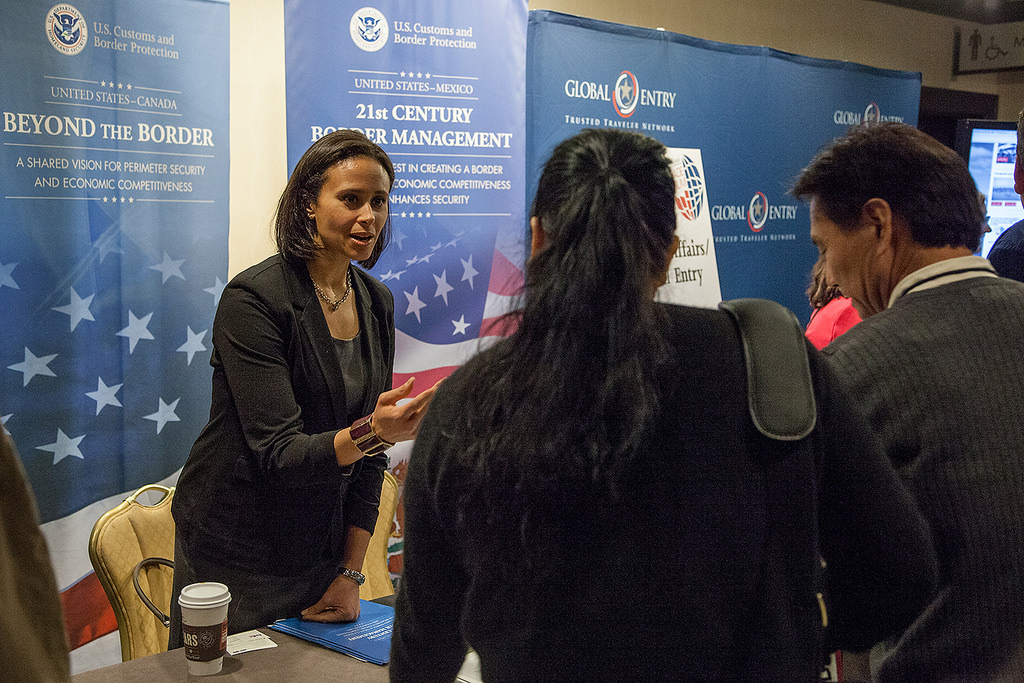
President Obama signed an Executive Order mandating the use of the International Trade Data System (ITDS) by December 31, 2016. The ITDS creates capabilities that will allow businesses to transmit, through an electronic “single-window,” the data required by the U.S. Government to import or export cargo. Today, Customs brokers submit information for import entries electronically to Customs. Some agencies such as FDA are connected to CBP, but for many agencies, the only way to secure a release of cargo from their jurisdiction is to either a) submit through a separate electronic portal [Fish & Wildlife did this] or to submit a paper form [EPA requires this]. When there is a deviation from an all electronic format, the two greatest risks are: The paper form gets lost in transit, causing delays to the release of the cargo for import (or export) and causing financial hardship, missed sailings or both. The releases are not properly received for all the agencies involved and cargo is delivered or shipped leading to penalties or in the most extreme cases, a demand for the return of the cargo. As envisioned by the trade, ITDS is the means to move past those problems. On the government side, a newly expanded group, the Border Interagency Executive Council (BIEC), will be responsible for improving coordination among the dozens of agencies with import and export requirements and with outside stakeholders. The BIEC is charged with cutting red tape and reducing supply chain inefficiencies, while managing the risks presented by goods flowing in and out of the United States. The completion and deployment of ITDS will save money for American importers and exporters, and ultimately consumers, by reducing the amount of time required to clear or ship goods and increasing velocity through the supply chain, getting goods to market more quickly. At Nelson International, we pay close attention to the agencies involved with our customers’ cargo besides CBP and have processes to insure that their goods are held safely and legally until it is fully released by all relevant agencies. If you’ve had a problem with improperly released cargo in the past, contact us to find out how we can help you take steps to prevent this from happening in the future.
VPA creates Motor Carrier Task Force to improve Hampton Roads Trucking
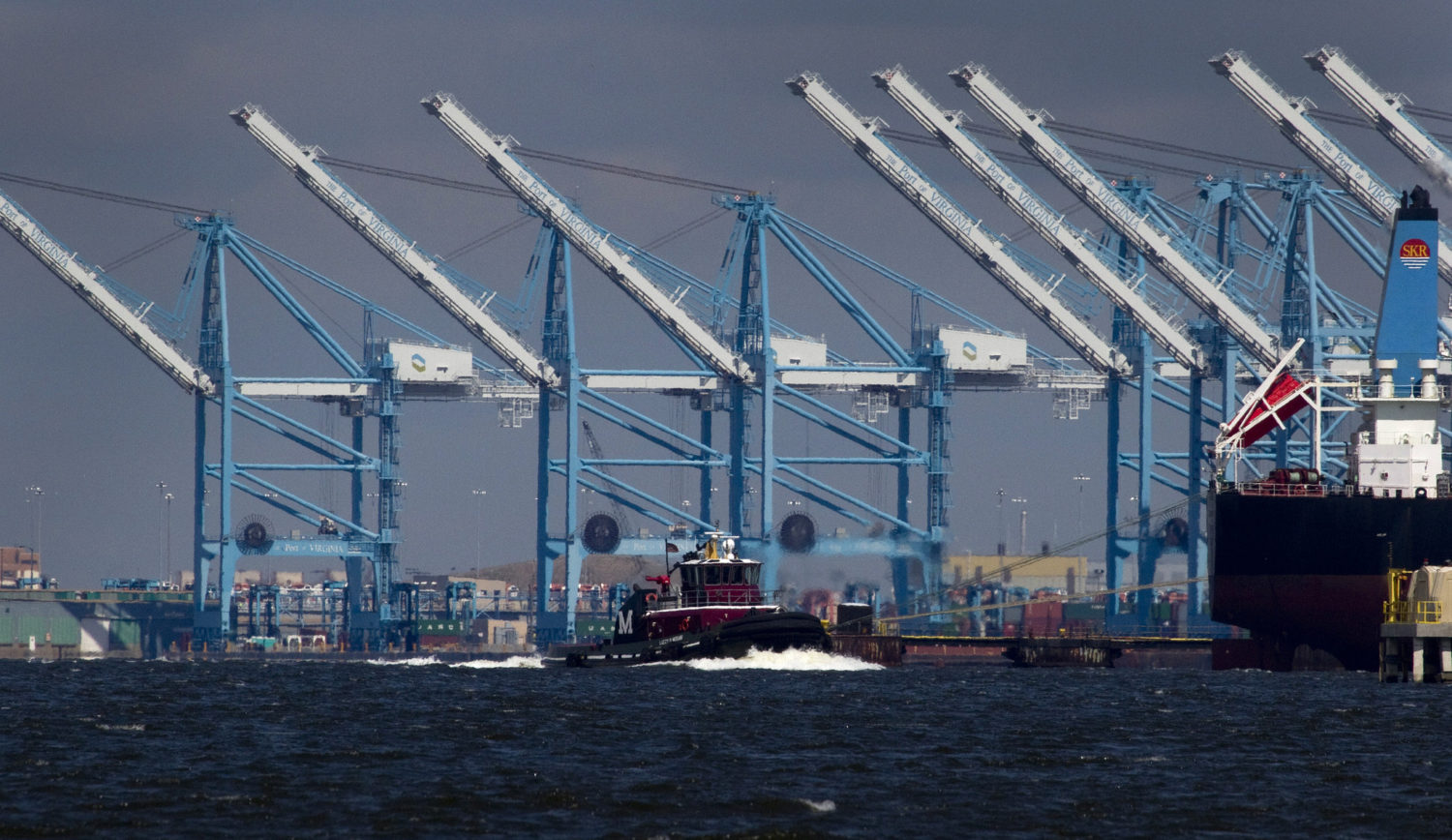
Sometimes all it takes is someone in a position of authority to have a firsthand experience at how bad things are to take steps towards positive change…and that happened to John Reinhart, the new Virginia Port Authority‘s CEO and executive director. Shortly after his appointment, John rode with one of his truckers to the interchange at the port. He sat in the passenger seat and observed a slow, impersonal process that then became accusatory about the merits of both the port and the process. With that single, protracted exchange, the Motor Carrier Task Force was born at a meeting on March 5th. The MCTF for short is comprised of 20 local industry representatives who have set an aggressive timetable to review port interactions with truckers in five places: an appointment system, in-terminal handling, refrigerated equipment, chassis dynamics and empty yards and gate interactions. Their first goal, and given the time to complete is an ambitious one, is to have an appointment system by May 1st for motor carriers to regulate the flow of traffic at the terminals throughout the day and eliminate the “rush hour” effect. In a release from the VMA announcing the task force’s creation, Reinhart said: “As The Port of Virginia, we must commit to ensure that our freight arrives and departs safely and as efficiently as possible. We don’t have all the answers, but it is our belief that with the help of our partners we can implement needed improvements. We must reduce congestion, improve cargo velocity and speed up truck and rail service to serve our customers.” The Motor Carrier Task Force guidance document can be downloaded at this link.

Lacey Act: Part II
In our previous post, I introduced you to the Lacey Act, the history of the Act and what importers and Customs brokers are presently doing to be in compliance with the law. The Act was implemented in phases, each covering different parts of the HTS. The responsibility of the importer of record (as defined by CBP) is to file the declaration, either electronically as part of the Customs entry transaction, or separately to PPQ in Baltimore, Maryland, using a PPQ 505 form. Either the importer or their broker may file but ultimately the responsibility is borne by the importer. However, it has proven complex and the question of what “is” and “isn’t” included in the Act has been left open to interpretation by importers, USDA and their Customs brokers. And getting a definitive answer has been a challenge and one that unfortunately leaves the importer exposed to penalties. The penalties are both civil and criminal in nature. The goods are forfeited to the government. A misdemeanor conviction is punishable by up to a year in prison and a fine of $100,000 for an individual or $200,000 for corporations. A felony conviction is punishable by up to five years in prison and a $250,000 fine for an individual or $500,000 for corporations. The burden of proof to demonstrate the violation rests on the US government who has to prove this in a jury trial. At trial, evidence is based on facts, not the documents. Because it is fact-based, the government will seek and employ evidence they collect from a range of sources, including, but not limited to, foreign governments, NGO’s, private citizens, anonymous tips, data analysis, border agents and industry members such as whistleblowers and competitors. One of the most famous cases that the government has prosecuted a company for under the Lacey Act is Gibson Guitars. Gibson settled for $300,000 and agreed to deferred prosecution with the federal government for illegally importing wood from Madagascar and India. Their CEO was a little upset at his press conference a day after their Tennessee manufacturing facility was raided by agents from Fish & Wildlife and Immigration & Customs Enforcement. In the end, the Lacey Act is something that importers of plant and plant products should concern themselves with. At Nelson International, we spend our days consumed with the regulations that govern the products our customers import and export and encourage our clients and interested clients to speak with us before they plan to ship goods internationally to help review the products for classification, duty assessment and compliance with governing regulations.

Lacey Act: Part I in a Multipart Series
The Lacey Act regulates imports of wood and wood products, but because of the way it has been implemented and the way it must be filed, there can be compliance gulfs created between Customs entry submission and Lacey Act Declaration submission. In this first part of a multi-part series, we want to provide background on the history of the Lacey Act and how importers must comply with its requirements and what Customs brokers do when filing entries for merchandise that is covered by the Lacey Act’s regulations. History: First enacted in 1900 to combat the impact of hunting to supply commercial markets, interstate shipment of unlawfully killed game and the killing of birds for the feather trade (remember, this was 1900!), an amendment to the Act was passed by Congress on May 22, 2008. The act was expanded to cover products derived from illegal harvested plants, including timber, and requires a new declaration for plant products. A great FAQ document is available here. The two agencies charged with administering the Act’s requirements are APHIS (for the plant provisions) and Fish and Wildlife (naturally, for the animal provisions). The Act was named after Congressman John Lacey of Iowa and signed into law by President McKinley. Responsibility: The U.S. Importer of Record (as defined by Customs), is legally responsible for a shipment, its contents, paperwork and declarations to the government at the time of importation. If an importer is using a Customs broker, that broker can file the declaration on the importer’s behalf. The Act carries two primary requirements; the legality requirement and the declaration requirement. The legality requirement means making sure that the goods which are being imported meet the admissibility criteria regarding harvesting, legality of transactions and compliance with international treaties or conventions such as CITES. The declaration requirement involves the filing of the PPQ Form 505. This declaration can be filed as part of the ABI transmission to Customs, or the form can be completed and submitted to CBP with the entry. If the entry is paperless, however, the form has to be mailed to APHIS with the entry number to connect the transactions. Part II of the series will focus on the implementation and consequences of non-compliance.
Craney Island and Panama Canal Growth
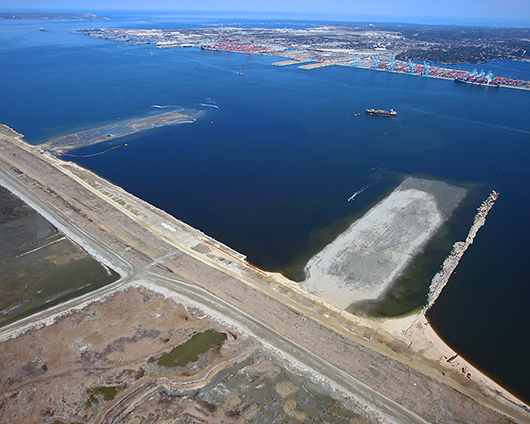
Craney Island is a manmade island located near the entrance to the navigational channel of the Elizabeth River and could be an integral component in the growth of Hampton Roads port when the Panama Canal expansion is completed. Everyone’s eyes are trained on the disagreement between the Canal authority and the contractors who secured an extension of the cooling off period over unpaid work and work slowdowns until February 1st. Whether Hampton Roads or any other ports throughout the Mid-Atlantic and southeast, the new locks which allow post-Panamax vessels are expected to bring an increased amount of traffic to these ports who are developing their highway and rail infrastructures to feed not only their own commerce but to be a gateway to interior ports for imported and exported goods. The island traces its history back to seventeen centuries settlers who mistook blue herons for cranes. The name “Craney” has seen several evolutions in spelling over the years, but the tenor remains the same. Currently under the administration of the US Army Corps of Engineers, Craney Island is growing in size as dredged material from the Port of Norfolk is deposited on it. An ambitious project has plans to construct a marine terminal on its east side. Material for the island’s expansion is not in short supply. Quoting from the Craney Island Eastward Expansion (CIEE) project’s website: Hampton Roads’ military, shipping and ship building industries rely on Craney Island Dredged Material Management Area (CIDMMA) to dispose of material from Norfolk Harbor. The CIEE will allow CIDMMA to accept dredged material well beyond its original capacity, ensuring that the channels in Hampton Roads remain passable and offer an economically efficient, reliable, and safe navigation system for maritime vessels. The potential for this expansion also holds hope for a third crossing in the region. Last June, the Hampton Roads Transportation Planning Organization (HRTPO) board agreed to a $5.4 billion project that would, in phases, include widening the Monitor-Merrimac Memorial Bridge-Tunnel and Interstate 664 and adding Patriots Crossing, a four-lane bridge-and-tunnel system from Interstate 564 in Norfolk across the Elizabeth River to the Monitor-Merrimac. It also would include a connection to Craney Island and Va. 164 in Portsmouth. Also included as a result of this study was the widening of I-64 on the peninsula in phases and evaluating part-time congestion tolling. Infrastructure, while billed by some as “pork”, is the lifeline through which commerce has the opportunity to grow and manufacturers and buyers of goods can get their products to and from the ports. It also plays a key role in attracting a talented workforce to the region who are able to enjoy mobility free of heavy congestion or limited transit opportunities.
Customs brokers are trust agents.
At Nelson International, we take the trust you place in us as your Customs broker or freight forwarder very seriously. In order to be a Customs broker, an individual must pass a difficult test given by Customs twice annually with a pass rate that averages around five percent. After passing the test, that individual must be fingerprinted, pass a background check and references are interviewed to make sure the person is “fit” for their position as someone trusted by Customs and to offer their services on a for-hire basis to importers. In July of last year a licensed Customs broker, and someone in a leadership position in a local Association in California, was sentenced to prison for a role they played in avoiding import duties and profiting personally from their role in this scheme. The NCBFAA, our industry’s trade association, immediately sprang to the defense of the industry and firmly reinforced the position that this is not representative behavior, and in fact this person was an outlier. Customs brokers are trusted by the government to, “collect, protect and defend the revenue of the United States government.” We receive duties from importers and are required, by law, to remit them. (Note: Importers can pay Customs directly through a variety of means including ACH and Periodic Monthly Statement, ask us how.) We declare on behalf of our importers the contents of shipments, their descriptions, values and are responsible for security as well as revenue. The scheme by which these individuals defrauded the government relied on several manual processes which Customs is closing the loopholes with anyways using new technology and rules to track in-bond cargo. However, additional technology to increase visibility and improve the audit process is not a reason to expect that the industry will seek a new way to game the system. We are mindful of and understand the reputation we have built over two generations here at Nelson International. Know that when you retain us for anything in your supply chain from domestic trucking through to international shipments and Customs clearance, it is handled with the utmost attention to detail, the regulations and with the personal touch you expect.
