

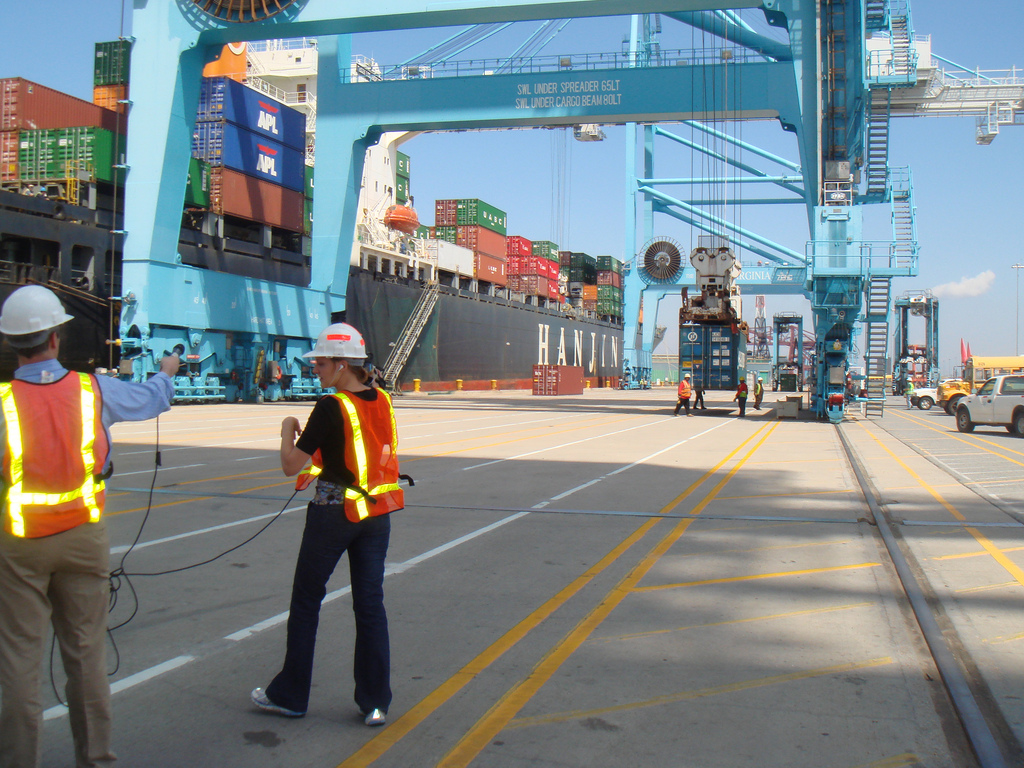
The Port of Virginia is extremely happy at the increase in volume over last year; their most recent report had them with an 8.6% gain over this same time last year. We are able to feel this increase, too. This increase was fueled by an increase in export containers; up 12 percent from a year ago. The increases are welcome, but the problems that we were experiencing earlier this year with congestion and poor truck service have not abated and are still responsible for reduced throughput and productivity. The continued increase in business over the course of the year shows that the port will finish more than 7% ahead of last year’s figures if the trend lines remain the same. Because the Commonwealth operates the terminals themselves rather than having franchisees run them, the breakdowns land squarely at the feet of the Port Authority and its executive director, John Reinhart. Virginia’s ports have more than a third of their cargo arriving and departing by rail, one of the highest percentages in the nation. However, the portion that leaves by truck has increased more than 20% from last year. To cope with this, the port has added extra labor costs and hours which ate into their profits. On the whole, the prognosis and health of the port is solid. Combined with the continued progress towards the opening of the third set of locks on the Panama Canal, carrier alliances and consolidations and shipper demands for more choices than just the US West Coast, Norfolk will be a key player in international trade not just in containerized cargo, but bulk and other types of shipments as well. (Photo Credit Courtesy Flickr user Missy Schmidt, CC BY 2.0)
West Coast congestion severely impacting ports
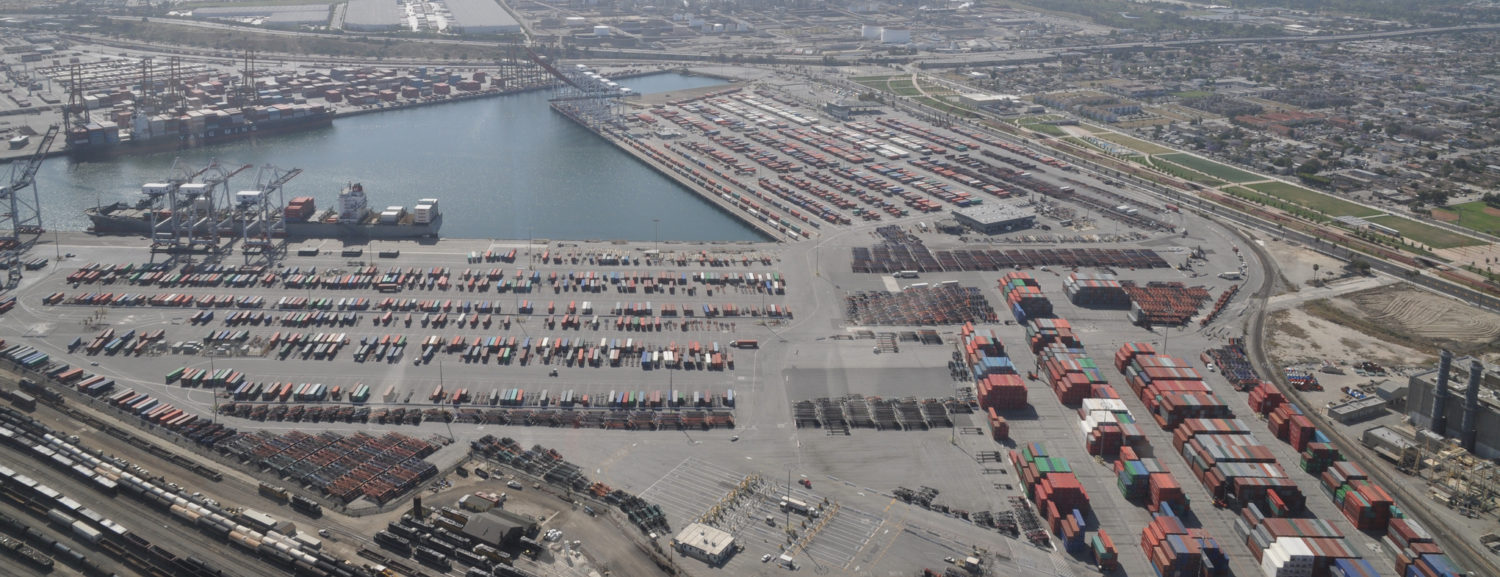
Depending upon who you listen to, there are multiple explanations for what is happening at the ports of Los Angeles and Long Beach right now. Regardless of the explanation, the fact is that congestion is at critical levels and cargo isn’t moving on or off piers, terminals, trains or vessels at a fast enough rate, and it is having a cascading effect. How bad is it? Port of Long Beach Executive Director Jon Slangerup, in an interview with the Journal of Commerce, said the following: “We’re three to five days behind on rail,” Slangerup said. Truck turn times of two hours or longer at marine terminals, which had been accounting for about 12 percent of all truck moves in the port complex, are now double that number. Cargo interests report waits of five to 10 days until their containers are ready for pickup. For the first time, along with imports that are running more than eight percent higher year-on-year, there was mention of possible ILWU activities that were contributing to the slowdown. From Wednesday evening October 8th, there were reports that mechanics were ordering additional safety checks on trucks, chasses and containers leaving the port that were more than doubling the outbound processing times. Things have reached a critical enough mass that the National Retail Federation weighed in as well, suggesting that the contract which expired in the summer should be extended through November to make it through retailer’s peak season. This would allow for some administrative and jurisdictional remedies to be applied, aiding the efforts to reduce the congestion problem. We are working with our carrier, trucker and rail partners to keep your cargo moving through southern California in spite of what is happening. If you have any concerns about the handling or progress of your shipments in transit, do not hesitate to speak with us about it.
Court ruling causes concern for compliance, import managers.
Last week, the US Court of Appeals for the Federal Circuit issued a decision in the case of the US vs. Trek Leather. In this case, the president of the company caused the importation of cargo that was undervalued when it was declared to Customs and Border Protection. When a company is in violation of import laws, whether negligence, gross negligence or fraud, the penalty is usually limited to the company. In this case, the Court reversed a lower court ruling and they found that the president of Trek Leather was culpable in the company’s actions and is seeking a penalty against him personally for gross negligence. Companies employ individuals in many capacities to manage their regulatory or import programs. In many cases those people hold positions such as Import Manager or Compliance Manager. They understand their responsibility to ensure a company’s compliance with regulations to the best of their ability, but if something is happening outside of their view and knowledge, this ruling opens the door to allow Customs to seek prosecution against the person in that position of authority. For those people, it is a wake-up call to evaluate what kind of additional legal protection, if any, their companies should be providing above and beyond their standard compensation and human resources provided services. It should also make boardrooms sit up and take notice about the fact that liability can reach into their ranks and into the ranks of their top compliance personnel. Companies should evaluate what additional protections they are providing people in these positions to assure quality of staff retention and not to impair their recruitment efforts when there are vacancies.
International trade in organic products
In the United States, food is evolving because of trends of people eating healthy, eating local and knowing more about the products they are purchasing for themselves and their families. Organic produce is easy to spot in the United States and the standards that we have set are understandable. But does organic in the eyes of the USDA really qualify for organic when the product is imported? The USDA’s Agricultural Marketing Service (AMS) has jurisdiction in this area through something called their National Organic Program, or NOP. There are a number of bilateral programs and agreements that allow a foreign country’s organic product to receive the same consideration when sold in the United States. Equivalency Arrangements An equivalency agreement is an agreement between two countries allowing products that are produced and certified according to one country’s organic standards to be sold and represented as organic in the other country. The NOP has an equivalency agreement with the Canada Organic Regime, the European Union, and Japan Recognition Agreements A recognition agreement allows a foreign government to accredit certifying agents in their country in adherence with the USDA organic regulations. The certifying agents can then certify organic products only in that country to the USDA organic standards. The NOP has recognition agreements with the following nations: India Israel Japan (through September 26, 2014) New Zealand USDA Authorization of Certifying Bodies While there are established agreements in place as laid out above, this does not preclude other countries from selling and marketing products as “organic”. The USDA has established criteria by which government or private sector organizations or authorizing bodies can apply to certify farms and businesses as meeting the required standards. More information can be found here.
Russian sanctions mean about-face for American agriculture shipments
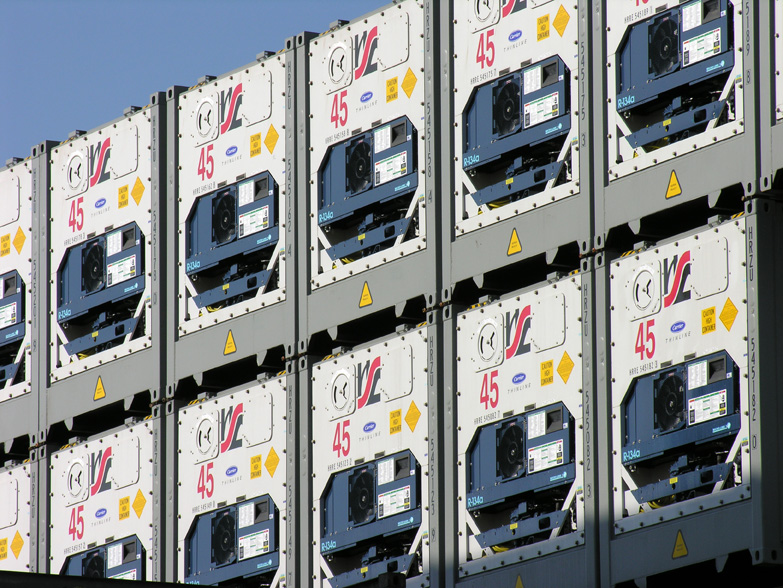
The situation in Ukraine and continued escalating financial sanctions imposed by the West have led Russia to take measures of its own, and that includes closing Russia’s borders to a large number of American and European agricultural products, effective immediately. A country usually only closes their borders immediately when there is a public health emergency for contaminated food or a wildlife pest or infestation. However, in this fluid tête-à-tête between nations and trading blocks, reaction times are much faster. The closure of Russia’s borders means that hundreds of containers of perishable, non-perishable and bulk food items in transit need to be diverted or returned. In an article in the Journal of Commerce, Maersk details what they’ve had to do with their customers who have shipped poultry, beef, fish and vegetables to Russian consignees. Because much of the product is frozen, it can be redirected to other buyers, but for less than what they were initially sold for, in some cases pennies on the dollar. Cargo is being redirected to interests in Asia and Africa. What about insurance? Could that help? There is at least one coverage that might apply, called “Export and/or import embargo indemnity,” but it is something to be discussed with your underwriter. The impact is felt not just by shippers of these commodities, but the ports from which they depart. If there is a silver lining, it is that while Russia is closing its doors, other countries will have to step in and meet their needs opening new markets to American agricultural products. Brazil is a large producer of poultry and is expected to increase their shipments to Russia, leaving Brazil’s other customers needing a new supplier. (Photo credit Flickr user Jaxport, CC BY 2.0)
Virginia, Hampton Roads, receive FEMA grant money for port security
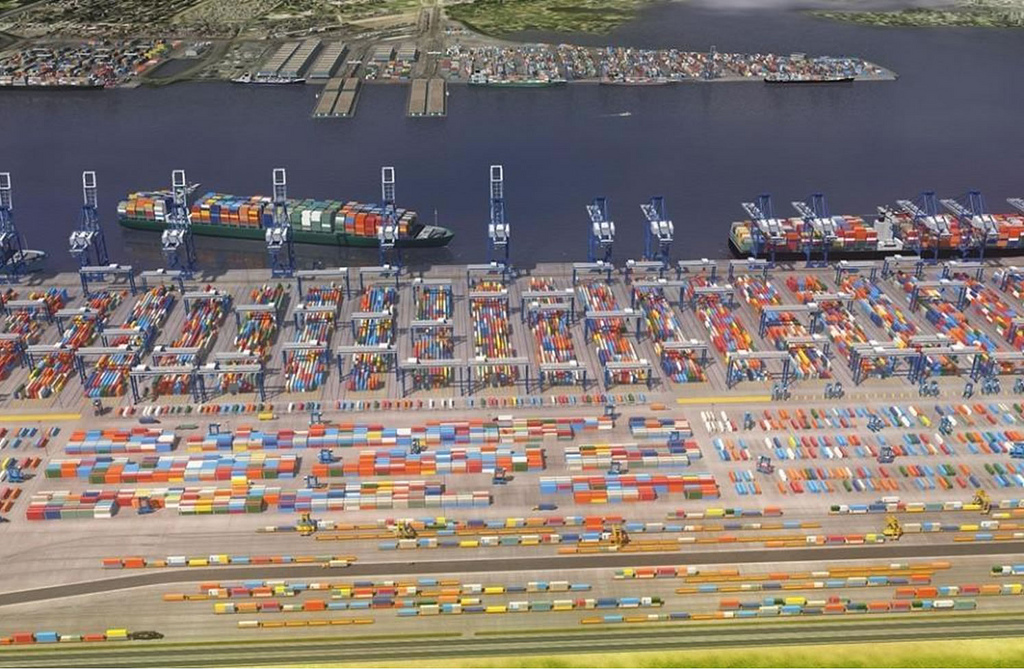
The Commonwealth of Virginia and the Port of Hampton Roads have received funding in FY 2014 from the Department of Homeland Security’s Federal Emergency Management Agency (FEMA) collectively in excess of fifteen million dollars. These grants, which cover homeland security, port security, transit security and other activities, are part of a total $1.6 billion in Preparedness Grant Programs that were handed out to states and tribal governments. Virginia received $7.4 million from the State Homeland Security Program out of a total of $401 million dollars that were awarded and another $8 million in Emergency Management Performance Grants (EMPG). The Hampton Roads area received $1 million from the Urban Areas Security Initiative, which is designed to address the equipment and training needs of high-threat, high-density urban areas. Of greatest importance to the trade was a little over $700,000 awarded to the Virginia Port Authority Port Security Grand Program funds. From the DHS press release: The purpose of the FY 2014 PSGP is to competitively award grant funding to support increased port-wide risk management; enhance domain awareness; conduct training and exercises; expand of port recovery and resiliency capabilities; further capabilities to prevent, detect, respond to, and recover from attacks involving improvised explosive devices (IEDs) and other non-conventional weapons. The issues of homeland security and port security are crucial. Like infrastructure, the cost of security that is focused on our nation cannot be expected to entirely be borne by the private sector alone. Grants like these are absolutely important to meet the rigorous demands and standards that Customs and Border Protection and other agencies require for access, cargo and employee screening and security to keep America’s ports safe. (Photo courtesy of Flickr / Missy Schmidt, CC BY 2.0)

Filing entries through ACE
Customs and Border Protection are progressing steadily down the path of transitioning from their thirty-year old Automated Commercial System (ACS) to their modern-day Automated Commercial Environment (ACE). It has been longer in development thanks to added security and trade and processing requirements, but CBP is firmly on a path with a deadline: November, 2015. ACE IS COMING By November, 2015, Customs will be handling all entry and manifest processing functions in ACE, and in October, 2016, ACS will be decommissioned. Sure, there are entries that won’t have liquidated by then like interminable antidumping entries, and they’re working through how to handle that right now. Customs brokers are able to file entries through ACE now, but the release and summary parts still straddle the two systems. Just last week, CBP published their new ACE Deployment Roadmap showing where they’ve been and what they have still to go. GOODBYE PAPER CBP’s vision is to remove paper (the 3461 release document and 7501 entry summary will become things of the past) and drive towards data. This includes passing data back and forth with government stakeholder agencies for their review and release as well as a document imaging system. Intentionally or otherwise, CBP is going to put messenger services who take packets of paper between brokers and Customs into another business because there won’t be anything to pass around. The new electronic environment also aids their establishment and expansion of the ten Centers of Excellence and Expertise stationed around the United States which focus on different commodity groups. CBP has said that it is not out of the question for an entry filed in Norfolk to be reviewed and released in Atlanta, Los Angeles or New York depending upon the commodity. When filing entries through ACE, Customs brokers will want to provide the most granular level of data available about a shipment to CBP, and this includes down to the individual line on an invoice. We are working with our importers to find ways to automate the delivery and transmission of invoices and entry data to eliminate re-keying and provide the greatest benefits for filing entries through ACE for our importers.
PMA / ILWU Negotiations Continuing
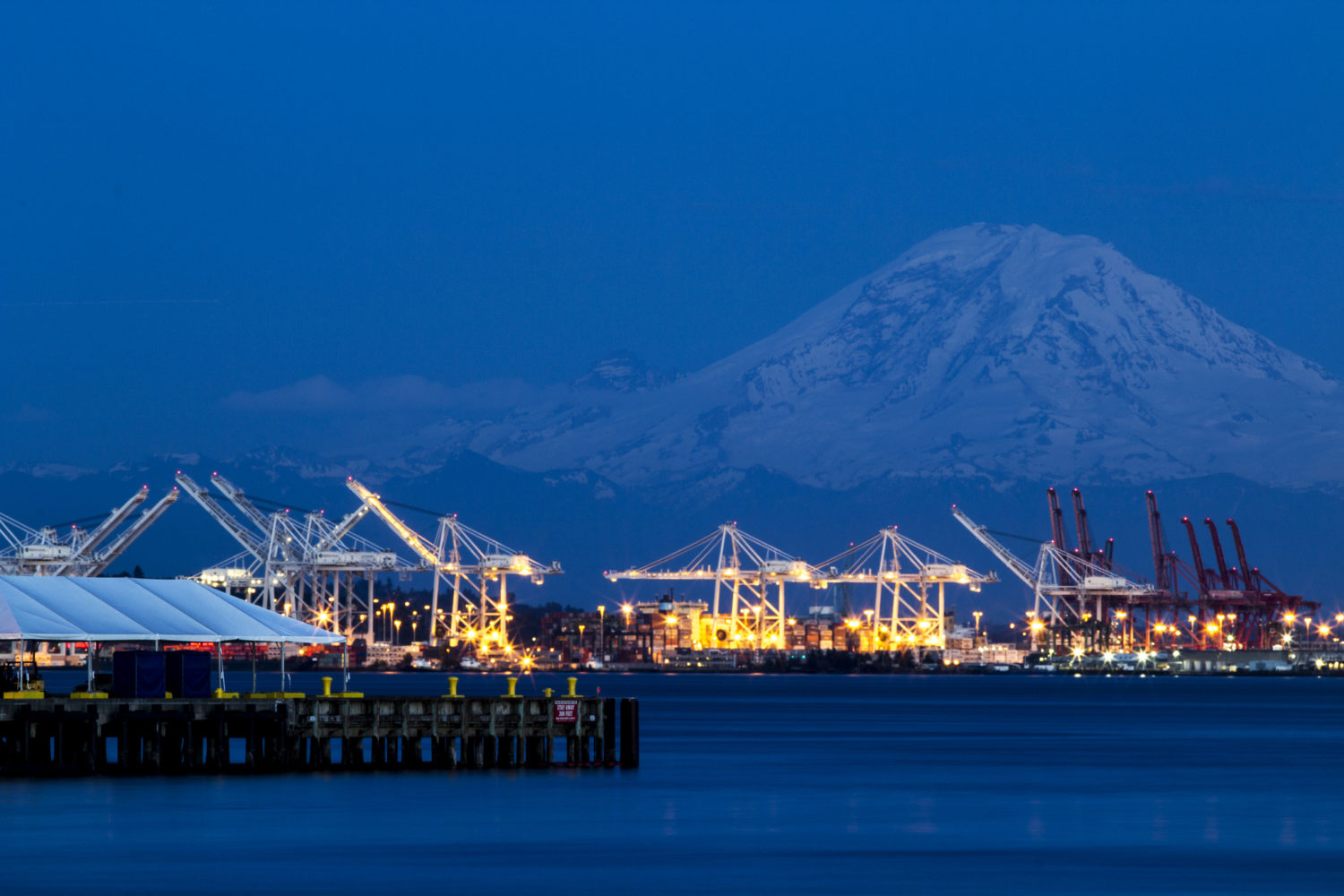
While those of us on the East Coast had our own excitement last year with the ILA contract negotiations, shippers are watching with a close eye what is happening in San Francisco right now, and those are the negotiations between the PMA and ILWU on a new contract for West Coast longshoremen. The contract expired on June 30th, but in a statement issued on July 1st, they are continuing to negotiate in good faith, both sides realizing that a work stoppage or lockout would jeopardize a very fragile economy that appears to be on the road to recovery. Individuals involved in international trade for any number of years remember the worst crisis back in 2002 when an eight day lockout required the President to intervene and cost the economy billions of dollars in damage. The negotiations this year are not centered on the usual concerns of base salary and compensation, but rather on the thorny issue of health insurance. The ILWU has what can be called, at a minimum, really really really good insurance. Like, $1 co-pays and crazy low deductibles. But under the Affordable Care Act, there is going to be a price to pay for that during the life of this contract, estimated around an extra $140 million that employers don’t want to bear themselves. So…what will give; more cost sharing with ILWU members, or some other solution? The other major discussion point this year is jurisdiction on the waterfront. There have been issues about moving work off the dock to remote locations (as anyone who has called their airline or credit card company knows, the chances of getting someone stationed in the US is pretty low) as well as which unions are responsible for matters like electrical or chassis repair or maintenance on the waterfront. Who handles what in an increasingly automated, distributed and shared economy and supply chain will need to be sorted out as well. And both sides feel the pressure coming from many different directions. The Panama Canal, scheduled to come on line in early 2016, will mean more cargo discharging here on the East Coast from larger Post-Panamax vessels on round-the-world voyages. Container rates, which seem to always want to only go one direction and that is DOWNWARD mean increased sensitivity to price by importers and exporters alike. Finally competition not just in the USA, but from Canadian and Mexican ports which are offering shippers a chance to discharge and move inland with increasing reliability. Time will tell and we are watching. We’ll keep you informed. (Photo Credit: Port of Seattle’s Shipping Terminals with Mount Rainier, by Tiffany Von Arnim, CC BY 2.0)
China says “no” to P3 vessel sharing alliance.
Whenever the largest players in a market come together to share capacity, there is always a cause for concern. Such was the case with the announcement last year of the intention of Maersk, CMA-CGM and MSC to come together to form a vessel sharing alliance called the “P3”. Announced a year ago, the P3 would have created an alliance with 255 ships and a capacity of 2.9 million TEU’s over 29 service loops. There was predictable concern about this and it was raised to the EU’s governing body to review; and on June 3rd they said they would not open a proceeding to review. The United States FMC was also reviewing it, but there did not appear to be any roadblocks and gave its blessing on March 24th of this year. Then, out of the blue, China’s antitrust regulator said no, effectively killing it on the spot, to the joy of the European Shipper’s Council who feared that this would lead to an increase in rates and reduction in service. The three carriers involved had believed this could lead to a reduction in operating costs of between 5 – 15%, which on their scale translates into billions of dollars annually. The curious element of the China Ministry of Commerce’s (MOFCON) P3 determination is that there is a belief that the move was made to protect their home carriers, specifically Cosco and China Shipping, not the shipping public. The future of the G6 alliance comprised of APL, Hapag-Lloyd, Hyundai Merchant Marine, MOL, NYK and OOCL remains to be seen. That alliance was formed to combat the P3’s perceived and potential dominance. Ocean shipping faces tremendous pressures on profitability due to depressed rates and carriers are taking steps to reduce their operating costs, including moving to larger and larger vessels which reduce the per TEU carrying cost. Everyone will be watching with interest to see if there is a further shakeout or consolidation among carriers in the wake of this recent decision. (Photo credit: MAERSK EDINBURGH near Cuxhaven, by Wolfgang, CC BY 2.0)
Ocean containers subject to mandatory weighing beginning in 2016.
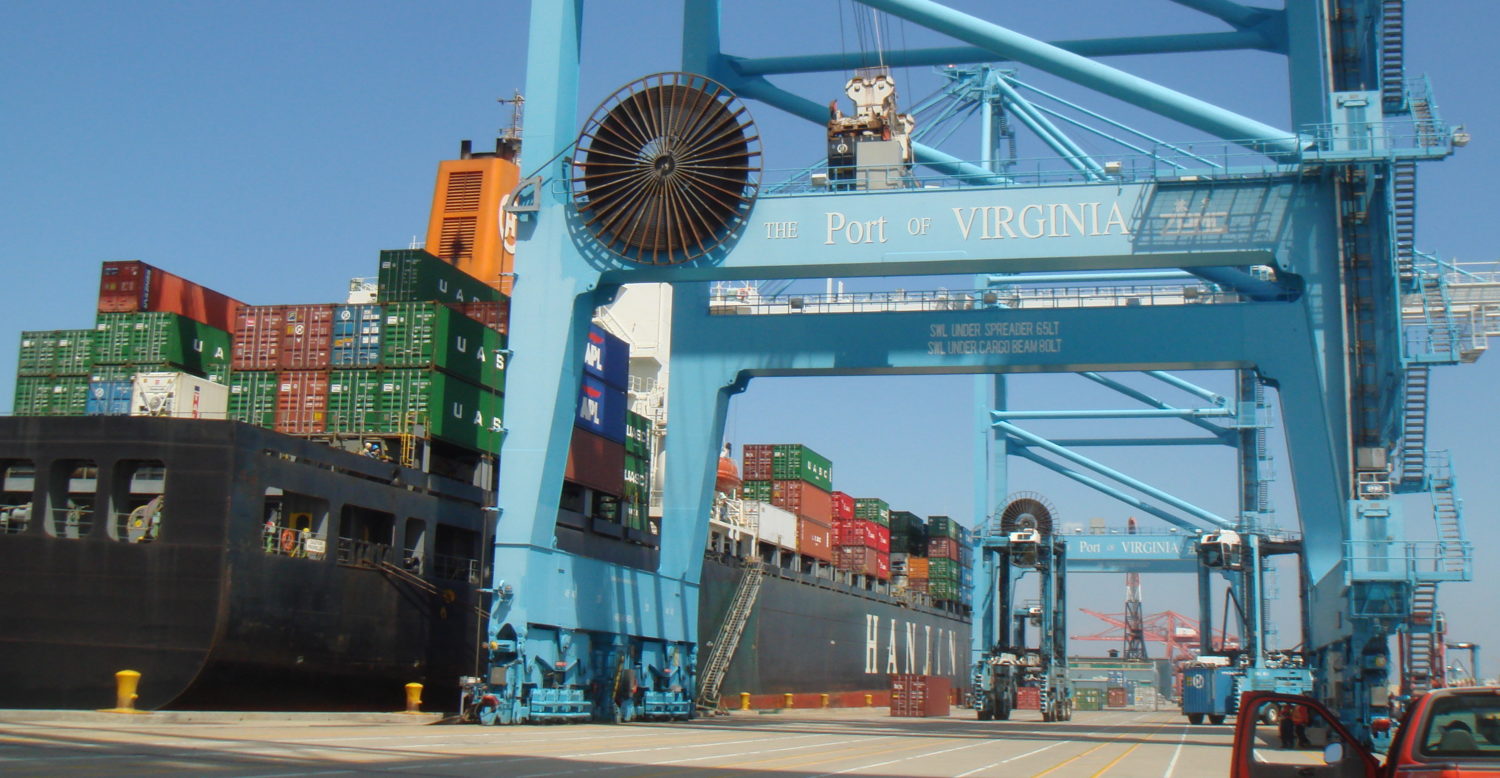
Photo credit: PN Tour 26Apr10 021 by Missy Schmidt, CC BY 2.0 In what is seen as a a major shift for container shipping handling processes, an International Maritime Organization (IMO) committee has voted to require that ocean containers be weighed prior to shipment beginning in July, 2016. The change in policy comes on the heels of several catastrophic events at sea resulting in damage to, or the total loss of, several container ships including the MSC Napoli in 2007 and the Deneb in Algeciras in 2011. Overweight containers have not been cited as a contributing factor to the recent loss of the MOL Comfort, but it is a consideration. These losses at sea are also added to losses of life on land when containers when longshoremen have been injured or killed as well as highway deaths attributed to overweight containers in the United States. Detractors to the policy include shipper’s groups in Asia and Europe and include claims that it will be difficult to enforce in developing countries and act as an impediment to growth. Overweight containers, which according to a JOC article are estimated at upwards of 130 million per year, contribute to reduced carrying capacity for ocean carriers and reduced train length for railroads. It’s not that the boxes are heavy; some accommodations can be made within a country’s legal loading requirements. It is that the umderdeclared weight, solely as a means to save money by not shipping additional containers, contributes to inaccurate computations throughout the supply chain, reducing efficiency and opportunities for all shippers. Misdeclared cargo weights can also be seen as a potential indicator of fraudulent activity, either by the shipper avoiding duties and taxes or a smuggler seeking to import or export illegal items or contraband. Aircraft operators don’t weigh bags and cargo for fun; they need to know how to load and balance an aircraft. Imagine the lawsuits if someone put too much cargo on a plane and it couldn’t take off, leading to loss of life and/or property. In November, the IMO is widely expecting to approve the changes to the Safety of Life at Seas convention. Shippers will be able to weigh the loaded container, or calculate the weight of the cargo and add the tare weight of the container to get the total weight.
