

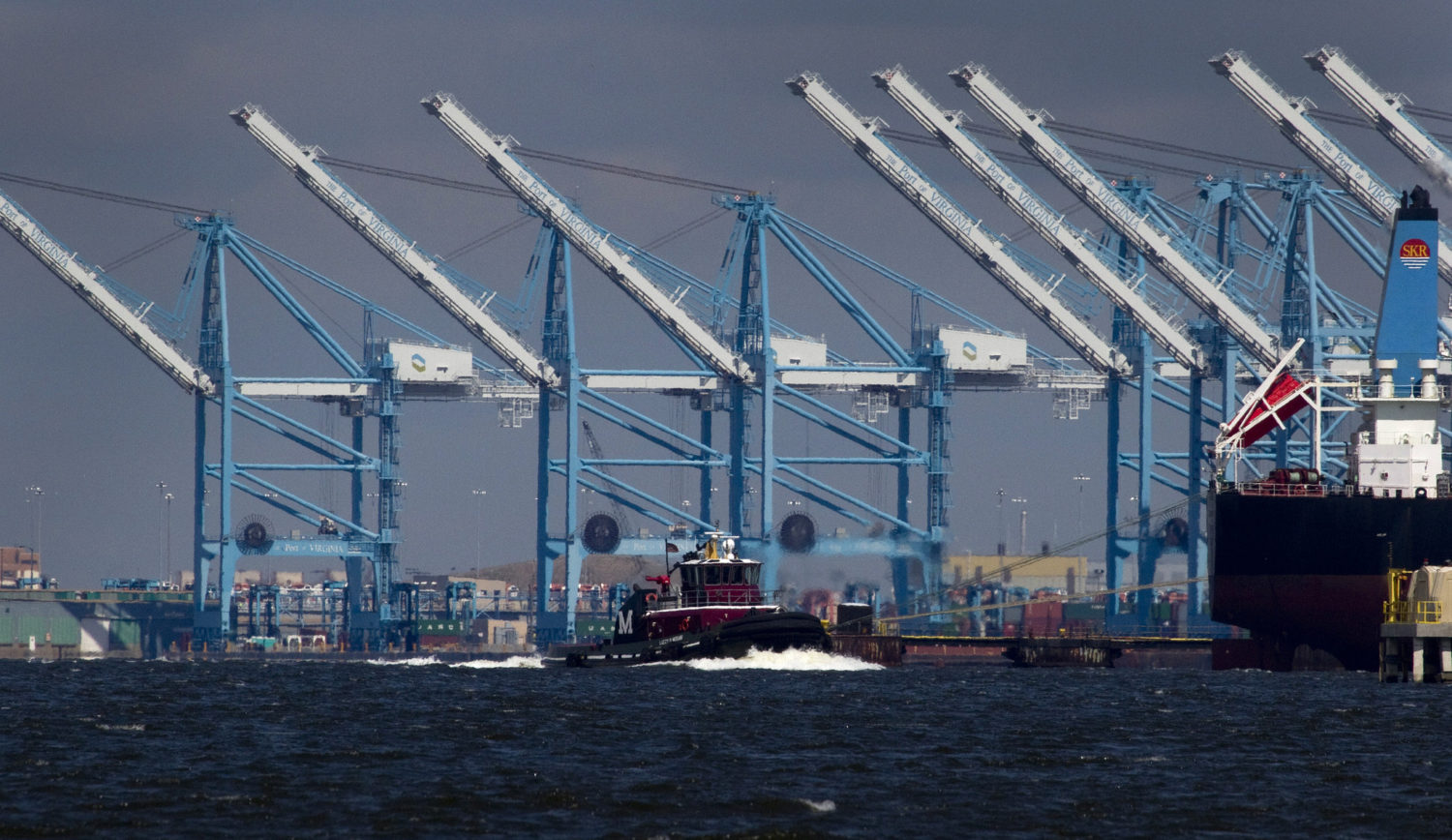
After the tempo of imports swung from the west coast to deluge the eastern seaboard, a reduction of imports across the board has cleared up much of the backlogs at ports on all coasts. While import volumes are down, the numbers are still over pre-pandemic levels, and the southern ports benefit significantly from the steady influx of cargo. The market shift won’t be permanent, but it will be a good incentive for frequently overlooked ports to invest in more infrastructure, plan for future growth and launch into the next phase of cargo understanding the stakes. There are a number of factors that go into the huge market swings. From the zero-COVID policy that caused Shanghai to shut down in the early summer to the massive shift east in order to avoid west coast congestion, the entire situation resembles a highway jammed with traffic that only moves ahead when you change lanes. Not every factor is a disaster waiting to strike. The excessive equipment imbalance that made it almost impossible to secure equipment with plenty of notice has eased greatly. By upending the schedules for container loading, carriers grabbed up empties and shipped them right back overseas without exports to cut the time needed to get imports back on our shores. Now that the imports have slowed down a little, the excess equipment is loosening the market and making it easier on shippers. Keeping an eye on our market and being aware of subtle changes that signal big shifts sets Nelson International apart from the competition. By closly studying how ocean cargo is developing and where market pain points will impact our customers, we can be both and advocate and adviser for our clients. If you want to stay ahead of the pack, come see what Nelson can do for you.

Ocean cargo stabilizes, sort of
Ocean freight carriers have been under tremendous scrutiny since the pandemic kicked off, but now many are looking at ways to balance the reduction in demand after they’ve spent two-plus years trying to scramble and increase capacity by any means necessary. While some carriers are opening up, merging with or acquiring air cargo arms, others are cutting back services they worked to bulk up during the pandemic. The trans-oceanic cargo on both sides has seen substantial reductions in demand that act like hurdles for these rapidly running businesses to try to clear. For the first time, the Port of New York has become the busiest port in the United States, grabbing the top spot away from Los Angeles, thanks to diverted cargo that avoided the west coast due to delays that plagued the area earlier in the year. With some of China still experiencing a cargo slowdown, less trans-pacific cargo, more trans-atlantic cargo, and stunningly improved east coast services have placed ports on the eastern seaboard in prime position to take over as the west coast recovers. While it’s doubtful that the east coast will hold onto the distinction permanently, the lesson remains that preparation and opportunity are equal facets of success. For the Port of Norfolk, the investments in infrastructure, dredging and new gantry cranes allowed them to accept post-panamax vessels as soon as they were on the water. For Charleston and Savannah, the updates made as the pandemic started, including expansions, dredging projects and improved intermodal options, saw both able to take over cargo that would be bound for only larger ports the year before. Even Gulf ports are now showing investments in both expanded services and green initiatives that will hopefully allow them to grow safely, efficiently, and cost-effectively to suit the increase in cargo moving across the Gulf of Mexico. If you need guidance navigating the new normal of post-pandemic ocean freight, your Nelson International representative is ready to walk you through the new options and build time and sustainability into your supply chain. Contact us today for more information.

Rail strike avoided, in the nick of time
One week ago, the US was seized with the terror of knowing that a rail strike was possibly coming in just seven days and that strike could upend transportation and drive an already struggling supply chain deeper into chaos. Thankfully, we woke up this morning to the news that a tentative agreement has been reached, and the strike will be averted for a few more weeks in the worst-case scenario. Though ten of twelve unions had come together with a general acceptance, two holdouts were fighting for quality-of-life concessions. Once the salary and raises were ironed out, many laborers wanted the “draconian” attendance, on-call, vacation, and sick time handled before they would be willing to sign on. The final details have yet to be confirmed, but anonymous sources confirm that the quality-of-life issues were dealt with in the negotiation. Because this is a tentative agreement, there’s always the chance that the bottom could fall out or that one side could be negotiating in bad faith, but even if the deal blows up, rail operations are safe for a few weeks as the cooling-off period is essentially extended for a few more weeks while the final details are set into the contract. Few expect any hiccups, but experience forces a good logistics expert to look at the reality of the situation and know how to pivot quickly if there becomes an issue in the rail negotiation. Part of working with an experienced logistics professional is the peace of mind knowing that we’ve seen it all and have the background to ensure that your cargo is kept safe during disruption. As we showed during the pandemic traffic jam on the west coast, we could divert to Norfolk and avoid delays. In the case of a rail strike, your representative at Nelson International will work with truckers and domestic air carriers to ensure minimal disruption. Contact us today to learn more about our services.

Port of Virginia thrives despite East Coast congestion
The Port of Virginia has set another record for its most productive July ever. Coming in at 318,000 TEUs in July, the port moved over 24,500 TEUs more than July of 2021, an increase of 8.4%. As the fourth consecutive month handling over 317,000 TEUs, the upgrades at the port are showing how benefitted the throughput has been by infrastructure investments. With ten new vessel services in the last twelve months, five of which came in the last five months, the port is ready to meet the moment as cargo capacity reaches critical levels on the east coast. Those critical levels are part and parcel of the congestion we’ve seen as record imports head to the US from Asia. An influx of cargo caused delays in Los Angeles and Long Beach as ships were queued in San Pedro Bay last summer. As many shippers moved cargo to arrive on the east coast, the ports of NY/NJ and Savannah, GA have seen their numbers climb. Without the throughput power of the west coast, where 40% of Asian imports arrive in the US, the smaller ports are struggling to keep up with the overflow and likely will not bounce back as fast as LA/LB did. Considering the congestion in LA was due to more than 100 ships waiting for service, NY/NJ are only at 20, Savannah is at 40, and Houston only 25 – a huge explainer of the ability of LA/LB to handle the huge numbers, even when it gets crazier. As we discussed earlier, the Port of Virginia is working to create the cargo corridor running from the east coast through the middle of America by rail before hitting the west coast or being diverted to warehouses and distribution centers along the way. This enables clients to bypass congested ports and find their way to the final destination without delays. Your Nelson representative is hard at work creating customized solutions to all of your cargo issues. We have you covered if you need to plan for west coast cargo diverted east. Contact us today and learn how we’re keeping cargo on track!

Head east to get west!
After two years of supply chain disruption and port congestion, many shippers are looking for alternatives. Whether they want a change of journey to avoid the deepest areas of delay or the chance to create backup plans with options for more tumultuous times, even the ports are getting involved in making the process less painful for shippers. The Port of Norfolk is working to promote a corridor to the west coast for cargo that might traditionally use Los Angeles but was routed to Virginia because it’s faster to move inland than get out of the ports. Especially for cargo coming from Europe, the pipeline from Virginia to the west coast gives shippers an option to access inland destinations faster than many other options. Bypassing overcrowded ports saves more than time; using the Port of Norfolk can save money by avoiding fees and delays from traversing the Panama Canal. “In today’s super-challenging trade environment, shippers are seeking dependable ways to efficiently get goods to destination, and this visionary service turns tradition on its head to dependably deliver an inventive solution,” said Thomas Capozzi, chief sales and marketing officer of Virginia International Terminals LLC, the Virginia Port Authority’s private terminal-operating subsidiary. As most pipelines have traditionally moved west to east, shuttling cargo from Asia to the east coast, the new option will help alleviate cargo congestion and expedite port operations. The options offered by the port are bolstered by several years of infrastructure investments that improved services and speed at the ocean, rail, and intermodal terminals in Virginia. This is just one of a myriad of options for creative cargo solutions this peak season. If you’re looking for ways to expedite your cargo, avoid fees and delays, and find out how an expert logistics team can support your company, contact your Nelson International representative today.

Port of Virginia sets cargo record in FY2022
The smartest bet in the last week would be the wager that the Port of Virginia would announce a record-setting FY2022 after huge numbers of imports and containers passed through the east coast port, partly because of the ability to handle post-Panamax containerships and partly because cargo destined to LA was rerouted to bypass the congestion and delays on the west coast. The port set the record in June by handling 317,000 TEUs, 36,000 more than June 2021, and passing the fourth record-setting month straight to end the fiscal year 2022 with more than 3.7 million containers handled. This is 14% over the last fiscal year when the previous record was set. For posterity, the current monthly record was set in May, part of the four-month run of records, at 360,000 TEUs. The success of the port comes from advanced planning that started half a decade ago, when the Panama Canal expansion allowed for bigger ships and ports had to update their infrastructure to accommodate them. Dredging the port deeper, widening it, adding new cranes and improving rail and truck services, the advancements were timed to ensure the port was ready with every new announcement. Investments from the state and federal government and leadership focused on the future of trade in Virginia helped ensure the smooth transition, just in time for the imports to shift away from the west coast to hit the eastern ports and avoid congestion. The improvements helped the port avoid the delays and congestion that plagued gulf and east ports as it crippled the west coast. The Port of Virginia was steady through the storm, growing to finish at 14% over the year before. If you need a suggestion on moving your cargo via the east coast ports, especially if you are interested in using the Port of Virginia, contact your Nelson International representative for more information.

California AB-5 bill complicates truck cargo on the west coast
A controversial law in California that reclassifies independent contractors according to a three-prong test has caused some contractors to protest because to maintain business, they have to be hired on by companies. The test hinges on the second prong, a rule that marks the difference between contractors and employees. SEC. 5. Section 621 of the Unemployment Insurance Code is amended to read: 621. “Employee” means all of the following: (a) Any officer of a corporation. (b) Any individual providing labor or services for remuneration has the status of an employee rather than an independent contractor unless the hiring entity demonstrates all of the following conditions: (1) The individual is free from the control and direction of the hiring entity in connection with the performance of the work, both under the contract for the performance of the work and in fact. (2) The individual performs work that is outside the usual course of the hiring entity’s business. (3) The individual is customarily engaged in an independently established trade, occupation, or business of the same nature as that involved in the work performed. Under this point, if a clear example of the difference was provided by Everee. “For example, if a company provides pool cleaning to the market, they cannot hire a worker to perform pool cleaning and classify them as an independent contractor. However, a hotel or hospitality company may hire a pool cleaner as an independent contractor to service pools on property it owns and provides to its customers.” Everee.com Some detractors have accused the law of being a pipeline into the Teamsters Union as independent contractors are prohibited from entering into employment unions and collective bargaining agreements. Supporters have pushed back hard on this, with the law’s author, Lorena Gonzalez has championed the issue. “Truck owners: don’t believe the lie. You can be employees, get good wages & benefits & keep your trucks. A truck is like any other equipment you use at work: an employer can provide it, or can reimburse you for using your own. Companies saying otherwise do not care about you,” she tweeted. For cargo, there will be hiccups but it’s hard to tell if delays are just business as usual for the supply chain or an actual swell from the change in trucker status but rest assured we are far from finished with the logistics issues that arose in the pandemic. We at Nelson understand that many issues that start on the West Coast have blown over to the East Coast ports that we call home, therefore we’ll be watching this situation carefully to understand how it could morph as it unfolds.

ILWU and PMA promise no west coast work stopping
Over on the west coast, the International Longshore Worker’s Union (ILWU) and Pacific Maritime Association (PMA) are deep into negotiations on the new contract that will dictate work for the next four years. The goal of the negotiations is two-fold to both allow for more automation, while still adequately compensating the workers who have been under intense pressure since the start of the pandemic sent the supply chain into chaos. In a statement regarding the process, both sides have agreed to continue negotiations past the deadline date of July 1, 2022 without a work stoppage or strike. According to The Loadstar, they said: “Cargo operations continue beyond the expiration of the contract. Neither party is preparing for a strike or a lockout, contrary to speculation in news reports. The parties remain focused on and committed to reaching an agreement.” The reassurance comes after difficult negotiations in 2015 and 2017 caused major disruption on the west coast. Rather than have the federal government try to step in, both parties finally got together on either a new agreement or an extension to the agreement to which they were contracted. Narrowly avoiding federal interference, it benefits all parties if an agreement is reached. Slow and steady, despite deadlines, is a preferred outcome over rushing to a stalemate. Considering these talks represent 22,000 dockworkers, there are a number of issues besides the typical automation and hourly pay that must be ironed out. While we typically focus our attention on the issues and updates that represent east coast ports, there is no real delineation where cargo is concerned. Soon the east coast ports will go into their own negotiations and the wheel will continue spinning. In a tight balancing act that must take into account a booming e-commerce industry, hazardous conditions brought to light by the pandemic, and massive advances in automation, the complexity of the situation is astonishing. Should there be issues in advance of the contract, despite the above assurances, you’ll want to be ready. If you have cargo moving through the west coast, even truck, rail, or air, and not ocean, contact your Nelson representative. Planning ahead for any worst-case scenario can help clients mitigate delays or issues that might arise if something stalls or another calamity arises. We’re on hand to help you through any concerns you have.

OSRA passes, Biden signs
Now that the Ocean Shipping Reform Act has passed, the FMC will be taking a closer look at the carrier practices that impact shippers. During the Pandemic, the disruption that hit the supply chain has driven the market into inflation with shipping costs climbing higher than sustainable. President Biden signed the bill on June 16 after it sped through Congress with bipartisan support. The bill will help the FMC investigate carriers on various issues. One issue will be the act of refusing loaded export containers in favor of empties they can speed back overseas to be loaded and instantly turned – a practice that has caused goods to sit and pile up while the equipment imbalances get worse around the world. Another issue we’re seeing is the application of fees as a penalty instead of an incentive – especially when the fees are applied toward containers that can’t be picked up, returned, or moved due to problems from the carrier itself. One of the issues they’re most critically trying to fight is the carrier’s habit of not taking responsibility for a lack of appointments or opportunities for shippers to comply with the requirements. Ocean carriers will also be providing a detailed quarterly inventory of their loaded exports, loaded imports and empty export boxes to the FMC so the trends can be investigated and future issues bypassed from the knowledge gained in the reports. Support from the National Retail Federation and the general public shows the disparity we’re seeing in how much help the ocean shipment needs to get the industry ironed out. Inflation has directly followed the shipping costs that erupted with the onset of the pandemic. Nelson International is keeping an eye on this and will have more updates as to how the OSRA will impact ports later in the month. If you have any questions as to how this will impact your ocean cargo, contact your Nelson representative for more guidance.

Shanghai Reopening Imminent
Shanghai is set to begin lifting Covid lockdown restrictions on June 1, and while this is a much-welcomed development for both citizens and corporations, it does come with further supply-chain complications. For months, Shanghai and other cities in China faced grueling lockdown measures in accordance with China’s “zero-Covid” policy that included barricades, mass testing, and other intense measures that brought the production and financial hub to a standstill. For example, it is estimated that there are approximately 260,000 TEUs that were unable to be shipped out of Shanghai in April and will now hit the supply ecosystem, along with new cargo. Vice Mayor Wu Qing had this to say, “We will fully support and organize the resumption of work and production of enterprises in various industries and fields.” This means we may see even more congestion in the United States, even higher inflation before the bottleneck eases and cargo is moving at a reasonable speed, and freight rates are rising in response. Freight rates to the US have risen by 6% in the last week. Experts cite rising passenger numbers on still limited flights with passenger baggage restricting cargo space in aircraft, decreased demand for goods (or ability to acquire these goods) during the lockdown, and limited haulier availability. However, the predictions are that once Shanghai has reopened, we’ll see a rebound effect that will result in more demand for goods, for cargo space, and that demand will result in flight frequency that could match pre-Covid numbers and availability to drive rates back down. Analysts say the Shanghai ports are operating at approximately 90% of their total capacity, and while they’re not currently facing the congestion problems we are in the United States, with reopening, they soon will. If you have questions about how this may affect your cargo, or any of the other supply chain situations we’ve been carefully monitoring here at Nelson, please reach out to your representative.
