


ON February 6th, Embark announced their semi-autonomous truck had made the 2400 mile journey from Los Angels to Jacksonville, FL. Though the truck had a human driver on hand in case of emergencies, Embark stated the truck did almost all of the driving for the duration of the trip. Because the truck had a human driver on board, it was still bound to stop running so the driver could rest for the required hours, making what could have been a two day trip into a five day journey. As a national shortage of truck drivers causes capacity and rates to increase, the idea of self driving autonomous trucks is attractive to shippers and carriers though the drivers themselves aren’t eager to watch their profession fall to automation. Embark states they’re not looking to displace drivers, especially since drivers are required for non-highway roads. Their goal is to reduce the work-load and strain on drivers across long sections of highway where driver fatigue is common, and can be deadly. Embark doesn’t manufacture trucks, but they have integrated the self-driving systems into 5 existing Peterbilt trucks and plan to acquire 40 more this year for further testing and long-haul deliveries. These trucks will also have human drivers on board as they’re not yet capable of running the truck off of an interstate and through small towns. Unlike other up and coming self-driving vehicles, Embark uses machine AI software and data from the sensors on-board its trucks to map its surroundings in real-time and avoid obstacles. Others begin with an existing map of the journey and plan their routes ahead of time, using data and sensors to supplement the trip.

Port of Virginia posts 6th record breaking year!
For six years in a row, the Port of Virginia has posted a record breaking year and 2017 was no different. Numbers coming from the port show a gain of 185,000 TEUs over 2016 which is a 7% increase over 2016; moving a total of 2.84 million TEUs in 2017 alone. Since 2012, the Port of Virginia has posted a record breaking gain each and every year as growth swells in the newly renovated port. Gains and growth are attributed to the infrastructure investments made to the port and surrounding terminal in the last year to increase the depth, optimize equipment and expand services throughout the Virginia International Gateway. Preparations and infrastructure improvements made over the last three years readied the port to accept the first wave of post-Panamax vessels to call Norfolk. Rail and terminal improvements coupled with an expanded service area and drayage options allowed more cargo to conveniently pass through the gateway into and out of the US. While many US ports experienced banner years in cargo handling, the Port of Virginia stands as a representation of the phrase, “Success is when preparation meets opportunity.” Forecasts predict that 2018 will continue to see record trade numbers as more people opt for the convenience of online shopping and e-commerce bringing in cargo from overseas suppliers to hit distribution centers and we expect the Port of Virginia to remain at the top of the list of busiest ports again when we look at the data from 2018. However, while this is still incredible news, we need to understand that the level of growth is almost unprecedented and cannot go on forever. We can expect to see months where numbers dip slightly as supply and demand fluctuate but don’t expect any receding numbers to last more than a 30 day period before bouncing back.

E-Commerce, the holiday juggernaut!
We’ve spent the year watching e-commerce grow into a behemoth shopping retailer, replacing brick-and-mortar experiences with convenient, almost second nature shopping from the comfort of our phones. While distribution centers have grown and new e-tailers sprung up, the monster presence of Amazon and Alibaba have turned a lackluster logistics period into one of unprecedented growth, almost unexpectedly. Advanced preparation and strategic price increases couldn’t help abate the pressure on 3PLs to meet the demand for deliveries this season. Thanks to Amazon’s benchmark two day shipping schedule, most sellers are stuck working within the shortest shipping options feasible considering consumers aren’t eager to wait longer for products coming from other sources. Everyone is trying to stick close to the two day, free-shipping model, leading to capacity issues, delays, price increases and ultimately, disappointed buyers in some cases. Almost all carriers are reporting record deliveries this year and while air capacity hiccuped a bit early in the month, container imports are skyrocketing at most US ports in the five highest import months on record. “Retailers are doing last-minute restocking as consumers head toward the finish line of the shopping season, but the majority of holiday merchandise is already in the country and ports are beginning to quiet down,” NRF Vice President for Supply Chain and Customs Policy Jonathan Gold said in a statement. “With tax cuts that will leave more money in shoppers’ pockets in the headlines and consumer confidence high, all signs are that this has been a strong holiday season.”
Port of Virginia invests in refrigeration and heavy-lift machinery.
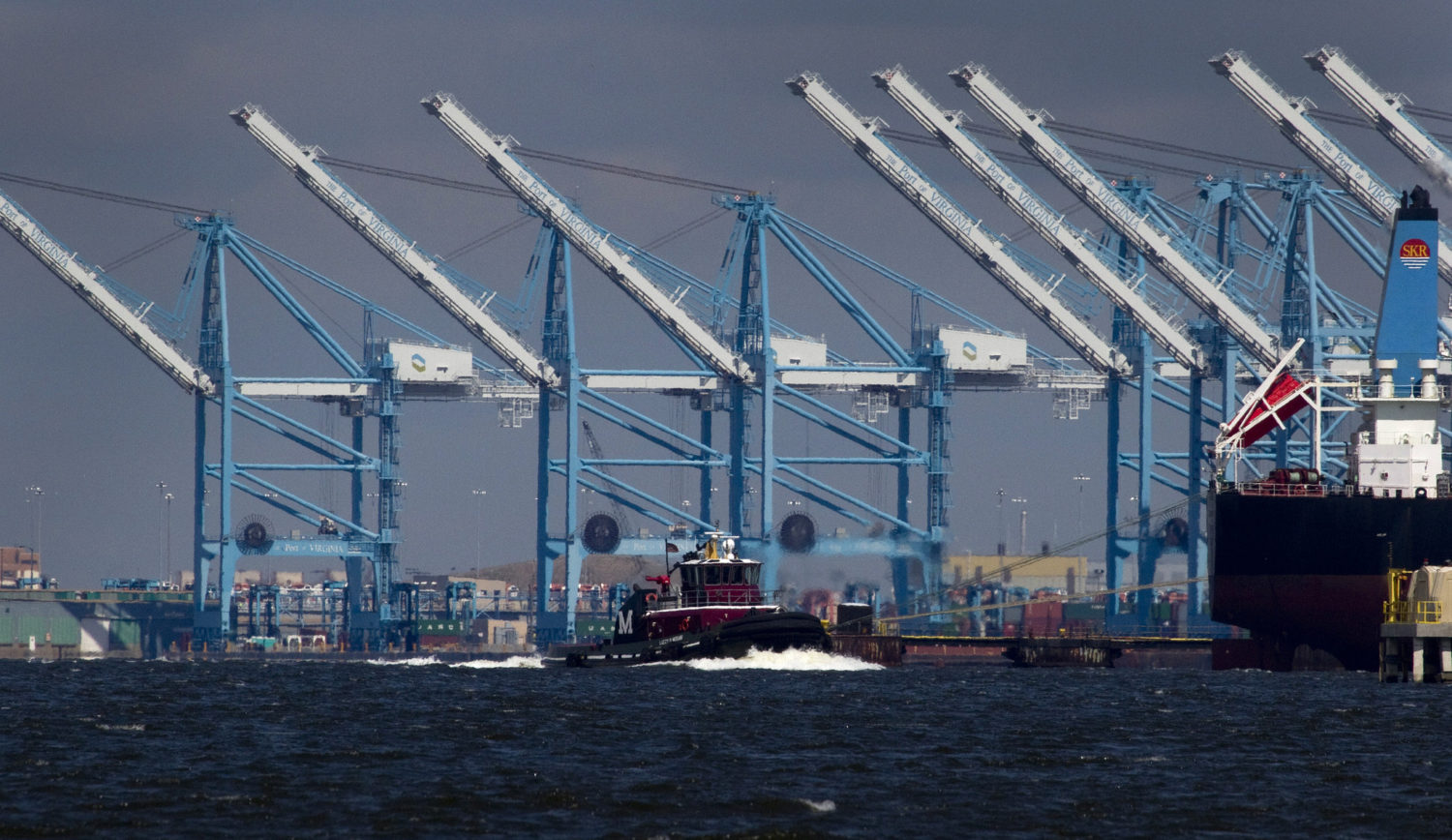
Last week the Port of Virginia put into service a portable, 40-plug central power unit that can be mounted on the Richmond Express barge and a specialized, heavy-lift forklift that will be used in the cargo operation at RMT (Richmond Marine Termimal). These pieces of equipment were purchased using $446,747 in grant money from the federal government’s Marine Highway Projects grant program. The power unit costs $222,700 and the forklift is $373,234. The port is contributing $119,186 in matching funds. The port expected the increase in refrigeration capacity to be a crucial part of their strategic growth over the coming year as it becomes a more consistent port for refrigerated cargo now that the port is participating in the US Department of Agriculture’s Southeast In-Transit Cold Treatment Pilot Program. As the newest member of that program, they will be working to import fresh fruit from South America. The expectation is that the heavy-lift forklift will increase the movable weight of containers, allowing them to load and unload containers at their max weight. “Both of these investments will create more opportunities to diversify and grow our cargo mix, drive business on the barge and across RMT. We are grateful for the federal government’s recognition of the effectiveness of the barge service and the growing importance of RMT in America’s Marine Highway Program,” said John F. Reinhart, CEO of the VPA. RMT has seen 25% growth in 2017 and is expected to continue that trend as more food and beverage shippers begin to make the Port of Virginia their home. Nelson International is ready to talk with you about ways you can increase efficiency and find greater value for your refrigerated and heavy-load cargo by moving through the Port of Virginia. Contact your representative about these new changes and what they mean for your freight, today.
Getting started with export cargo!
Your friends are encouraging you to go ahead and do it. The product is selling well here, why not expand your business and sell overseas. You have the extra inventory. You think to yourself, “What do I have to lose?” There are many risks involved in sales to foreign countries. The largest risk, however, is running afoul of US regulations on exports. To ensure compliance with all US Export regulations requires several steps. Below is an outline of those steps with links to the various government agencies. The first check should be with the Office of Foreign Asset Control (“OFAC”). OFAC is the government entity tasked with issuing embargoes, sanctions and blocking the assets of known individuals and entities that act on behalf of embargoed countries, terrorism and narcotics traffickers. If your client is on the Specially Designated Nationals And Blocked Persons List (SDN), there is a prohibition on US persons from doing business with them. This prohibition exists for shipments to countries with embargoes or comprehensive sanctions. If however, the sanctions are limited, you may be able to obtain a license from OFAC for your shipment. The licensing requirement is based both on commodity and destination. To learn more about these requirements go to: https://www.treasury.gov/resource-center/sanctions/SDN-List/Pages/default.aspx https://www.treasury.gov/resource-center/sanctions/Programs/Pages/Programs.aspx The Bureau of Industry and Security, Export Administration Regulations provides exporters with the rules surrounding specific commodities. They created the Export Control Classification Number (“ECCN”) to assist with this process. The ECCN links categories of products to alpha-numeric codes. The categorization of a product indicates that it is considered a potential threat to US security or economic well being. The product is then placed on the Commerce Control List (“CCL”). The CCL is the determinative factor of whether or not merchandise requires a license for export from the Department of Commerce. The licensing requirement is based not only on the commodity but also its’ intended destination. The designation of the ECCN on a proposed export is therefore crucial in determining next steps in the logistics process. Once you have the ECCN, you can refer to the Commerce Country Chart to see if the product requires licensing. To see if your product has a specially designated ECCN or if it is the default, EAR99 go to: https://www.treasury.gov/resource-center/sanctions/Programs/Pages/Programs.aspx For a step by step guide on how to be successful when entering the international market, please go to export.gov or consult your logistics provider for more resources. https://www.export.gov/How-to-Export

E-Commerce can make peak season year long
While a lack luster start to the year in international trade was not unexpected after a growth period of nearly 15 years, the second half of the year has become one of the healthiest peak seasons in recent memory. As the recovery of the global economy progressed, international trade continued to rise on the popularity of e-commerce, as well as historically low jet fuel prices, leading to robust growth in airfreight volumes. Angela Gittens, director general of ACI World, said this growth may be no mere fluke. “When we look at the traffic data over the last two decades,” she wrote, “we get a sense that aviation has entered a new era of unprecedented growth.” This unprecedented growth comes from a myriad of growing sectors in the logistics market including the new iPhone release and China’s Singles’ Day. Per JOC.com “Nowhere is this more apparent than in China, with Alibaba claiming that more than a million retailers participated in the country’s Singles’ Day Nov. 11 online shopping extravaganza. Alibaba said sales reached $25.3 billion, more than $7.5 billion higher than in 2016. China’s largest retailer JD.com started its Singles’ Day promotion on Nov. 1 and by Nov. 11 had sold products worth $19 billion, up more than 50 percent year over year. “ E-commerce numbers are improving the air freight data for most of the companies working in the supply chain, but growth isn’t without it’s problems. Air rates have an increased volatility in the market due to spikes and dips that are unforeseen in this new revenue stream. These fluctuations are mitigated with careful volume planning and pricing measures that offset variances for shippers. “Over the longer term, e-commerce will account for an increasing share of retail sales — the mega-trend of our times,” says Greg Guillaume, of Atlas Air Worldwide. Exposure to foreign brands around the world and proliferation of instant desire satisfactions should continue to drive this trend. No longer is shopping a focused act in which we need to purposefully engage. Last night, I watched television while surfing through Amazon looking for ideas about Christmas gifts and ended up buying a few household good I didn’t even know I needed when I sat down. Impulse buys can now happen without standing in line. Rather we look for those bored moments, pull out our phones, wonder what’s new and find ourselves half shopping while we work and travel. As with any boon, Nelson International will be watching close to ensure we’re capitalizing on trends and fluctuations to give our clients the best service at the best market prices.

Wind-powered cargo vessel makes maiden voyage
Recently, the Avontuur, the world’s first eco-friendly cargo ship, made her maiden voyage from La Rochelle, France to the Port of Montreal. With eight sails and 15 crew members, the 43.5-meter long schooner was built in Germany in 1920 and refurbished in 2016 to include solar panels and wind turbines. According to Portfranc Logistics the ship’s legacy “hopes to create a ‘greener’ and ‘oil free trade path’ between Europe and North America.” The Avontuur arrived in Canada on October 14th with cargo such as boutique clothing, artisanal kitchenware, champagne and French textiles. In the interest of creating an all eco-friendly supply chain, the cargo was even delivered to the origin warehouse at La Rochelle via electric truck from Portfranc’s partner Tempo One. “Beyond the oceans, our ambition at this specific moment is to offer a complete oil-free supply chain. This ship’s cargo was entirely transported by trucks powered with liquefied natural gas – fossil energy that is 50% cleaner than conventional gas,” said Portfranc Logistics. This trip marked the first oil-free commercial transatlantic journey of the 21st century, the company said. The ship is owned by Timbercoast, which provides wind-powered cargo shipping and with the help of the Canadian government, they plan to pilot the Avontuur through five Atlantic crossings before 2020. With two more specially designed ships, the Rotra Vente and Rotra Mare working between ports in the North and Baltic seas to deliver wind power equipment and the Finnish Estraden, which uses both green energy and fuel as a Prius type vessel hybrid, more companies are working to prove that a conversion is possible in the shipping industry. A conversion to hybrid power would save $7bn a year and reduce the carbon emissions by the equivalent of 12 coal power plants. Nelson International is always watching the changes in energy and shipping to promote the best value for our customers. We’re planning to be ready with real and applicable solutions for the shipping needs of today and tomorrow.
Would a Nicaraguan Canal be a Grand Idea?
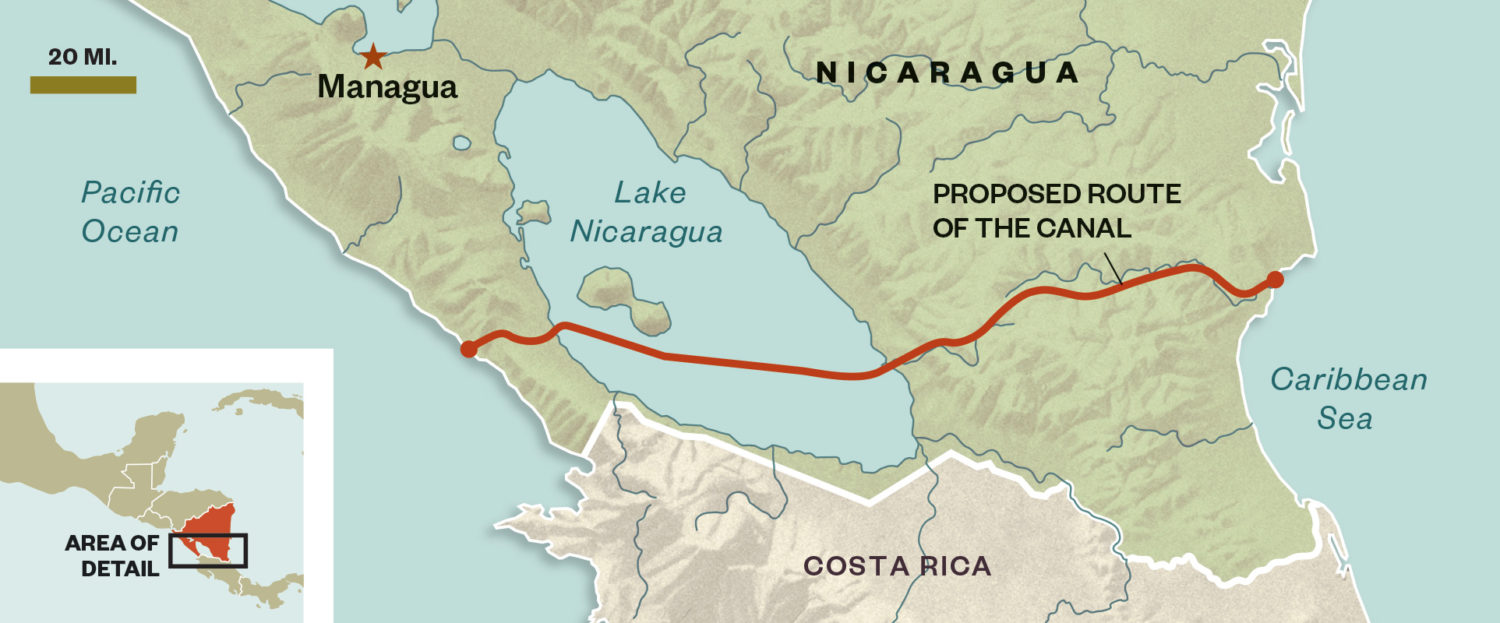
In 2013, the Nicaraguan president, Daniel Ortega and Wang Jing, a relatively unknown Chinese businessman made headlines when they announced that Nicaragua was going to build an inter-oceanic passage to compete with the Panama canal. The initial cost for the inter-oceanic passage was estimated to be 40 billion dollars, more than three times the gross domestic product of Nicaragua making the channel more than three times the length of the Panama Canal. The Grand Canal appeared to provide a win-win scenario, as Nicaragua would be receiving a much-needed boost to their economy and China would no longer be dependent on the western controlled Panama canal. Skeptics of the canal, however, pointed to Nicaragua’s recognition of Taiwan as a sign that the Chinese government did not support the Grand Canal. Jing’s company, the HKND group, agreed to build the Grand Canal in exchange for the sole rights to operate manage it for fifty years after that, with the possibility of another fifty-year extension after the waterway was operational. After the inauguration, China announced that they wouldn’t invest in the project, leaving many to wonder from where the additional required capital would stem. Where is the passage now? To date, the only visible progress is the widening of one road, less than five miles in length. The widening was performed to accommodate moving larger pieces of the channel’s infrastructure. Why has there been no progress? First, Wang Jing lost an estimated 85% of his fortune in the 2015 Chinese stock market crash, plummeting his fortune from $10.2 billion to $1.1 billion. Alternatively, HKND group has pointed to ecological and archaeological concerns as reasons for the delay. Still, others think that the plan to build the canal was a rouse designed to get the transportation concessions associated with the build. What does the future hold for the Grand Canal? We will have to wait and see.
Port of Virginia makes plans to compete with LA
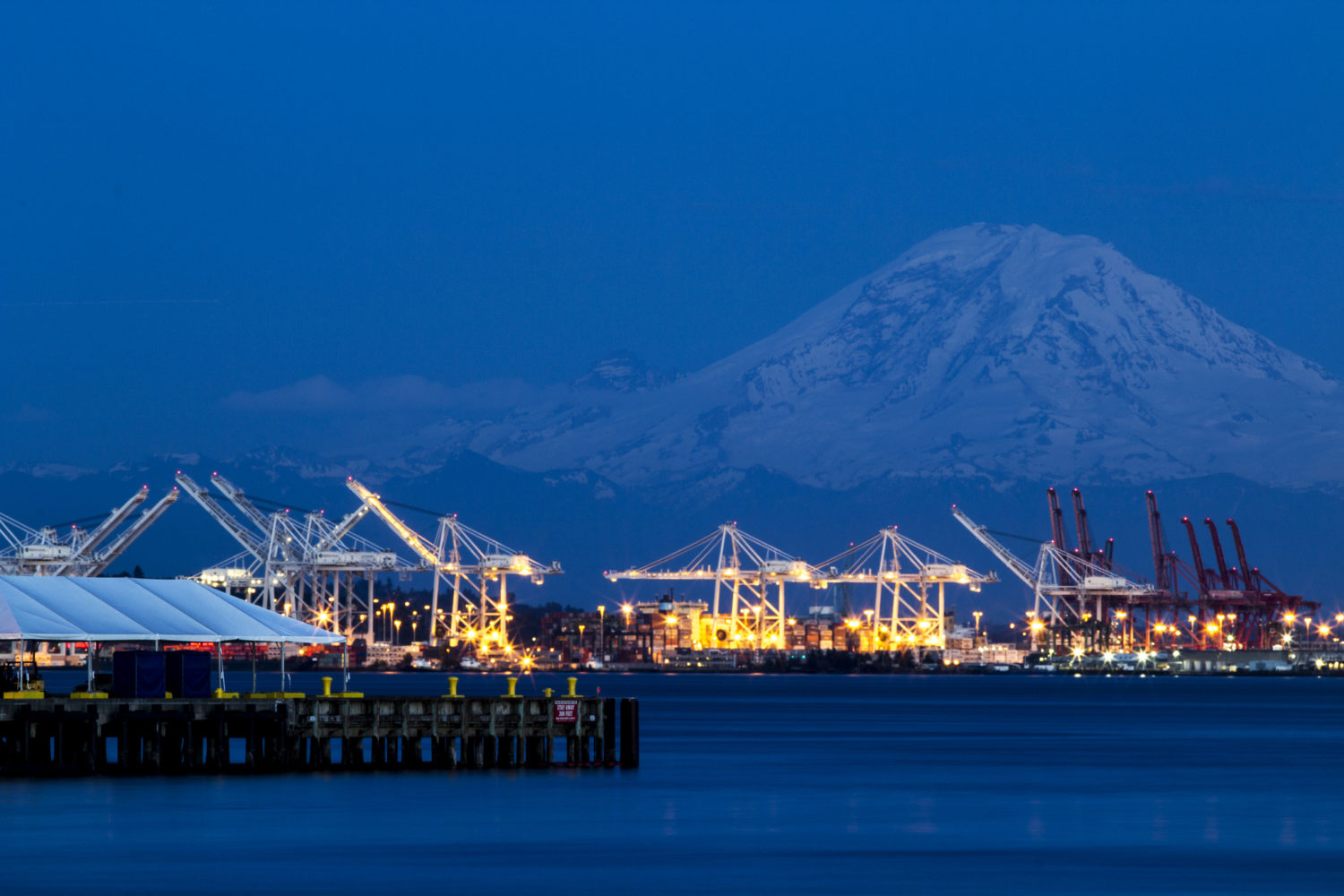
The Port of Virginia is laying plans to deepen and widen their channels to compete on the same level as the Port of Los Angeles. With current channels at 50 feet deep and 1,000 feet wide, the new plan backed by the Army Corp of Engineers, will deepen them to 55 feet and widen to 1,200 feet which is both deeper and wider than the Port of Los Angeles (53′ deep and 1,000′ wide), the nation’s busiest port. Plans also include taking the Thimble Shoals and Atlantic Ocean Channels to 56 and 59 feet, respectively. After a year of monthly record-breaking numbers, the Port of Virginia finds herself in the opportune position to further expand and invest in infrastructure improvements as mega-container ships more often call East Coast ports. After the most productive August in its history, with 240,605 TEUs handled, the port shows another 2.2% increase over August of 2016 with total TEU volumes up 7.4% and containers up 7.7% against last year. In addition to these increases, the Port has recently started offering double stack rail service to Pittsburgh effectively expanding upon an already growing rail market for Norfolk. The exponential growth and upgrades we’ve watched since we begun covering our home port does overwhelm us with pride and joy to see it. It also bears mention that the Port is working hard to convey their gratitude on behalf of the support they’ve received. During National Truck Driver Appreciation Week, from September 10th through 16th, the Port of Virginia gave out gifts and heartfelt thanks to visitors and drivers as a physical reminder of how large a family it takes to work in this industry. “For all that these men and women do for the port and the economy, this is a small gesture to say ‘thanks for your hard work and dedication,’ ” said John F. Reinhart, CEO and executive director of the Virginia Port Authority. “We are in the big-ship era, our cargo volumes continue to increase and we are forecasting consistent volume growth. The importance of the motor carrier to this port is greater than ever before.” In addition to Mr. Reinhart’s sentiments, we understand the teams around the world, our clients, shippers, carriers and service staff are all a single global family and it is with a familial pride that we move ahead to watch the Port of Virginia continue to grow and expand. We remind everyone, in the most lighthearted and friendly way that Virginia is coming for the title, dear Port of Los Angeles. You’ve got some huge shoes to fill and we all look forward to your own amazing accomplishments and will be here, both at Nelson International and in Virginia as a whole, cheering you on as well. Useful Links: https://pilotonline.com/business/ports-rail/port-of-virginia-advances-on–foot-channel-project/article_995def46-d010-5187-b9c4-7bd813594f91.html?mod=djemlogistics https://www.ajot.com/news/port-of-virginia-begins-double-stack-rail-service-to-pittsburgh https://www.ajot.com/news/port-of-virginia-posts-record-august-volumes
Hurricanes cause massive truck rate spike into affected areas.
Due to the weather issues in the Southeast and Texas, truck rates are climbing as capacity tightens, fiercely. The capacity issues are going to be felt most for cargo headed into South Florida as their outflow during September is normally negligible and return loads out of the state are difficult to find if at all. The active hurricane season in the South East and Gulf States has given rise to a heavy increase in trucking spot rates as distribution centers around the area are marked by flooding and high winds. With Hurricane Harvey barely out of Houston, the carriers are fixed on the assessment of damages in Miami as Irma traveled north through the busy hub of Jacksonville and up through Atlanta, GA. While Miami isn’t busy trucking cargo out in the fall months, it can cause even bigger trouble when trying to get cargo into Southern Florida and Texas. JOC writes that experts expect it to be at least six months before trucking rates and capacity return to normal. While any reconstruction takes place, trucks are set to deliver cargo but don’t usually have loads to pick up on the way back, leading to double and triple per-mile cost. Pending the fallout from Hurricane Irma hitting Atlanta, we could have compounded issues with rates and capacity as many distribution centers and trucking companies are over-stretched already. Northern East Coast ports like Virginia remained open and working to offset the delays, unlike the events that slowed down loads after Hurricane Matthew in 2016. In cases where cargo must travel into the South East, there are some trucks to be found, and by working with and depending on Nelson International, we can handle your cargo and ensure you’re getting the best rates and services during this time. If you have cargo concerns or worries, please reach out to us. We can plan for these issues with your supply chain so that their impact on your freight is negligible.
