

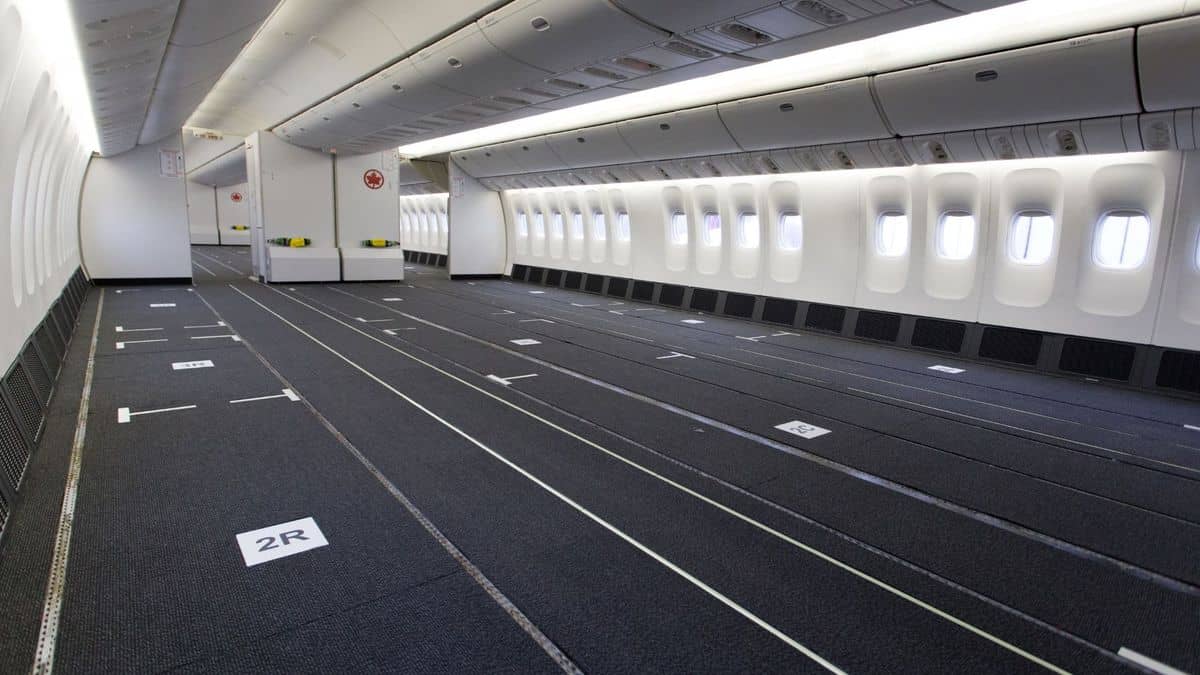
Since the domestic and travel flights have dropped off due to shelter in place orders, airlines who specialize in passenger cargo have seen their customers decrease to almost nothing. In light of the unflown planes sitting in wait for travel to begin, many passenger carriers have begun removing seats from their main deck to fill them with cargo as capacity on all-freighter airlines is at a premium. Previously, many of these planes flew as empty main decks with full belly cargo to bridge the gap in services that dropped out due to the grounding of so many commercial flights. Shelter in place orders, the coronavirus pandemic and travel restrictions have grounded many passenger aircraft while all-cargo airlines are working overtime to meet supply chain demands for essential goods and medical equipment that’s been in short supply around the world. A large chunk of regular freight that moves by air is carried in the belly space of passenger craft so without those flights going, the shippers have lost a great amount of space for their cargo. All cargo flights can’t seem to keep up and ocean cargo takes too long considering the compound issue of equipment imbalances and port closures. There has been some competition-related push back from freighter operators about restructuring of the rules on carrying cargo on passenger aircraft to match freighters. The FAA included information on weight, balance, fire suppression and dangerous goods – which includes much of the medical equipment desperately needed. For now DG cargo cannot be carried on the upper deck and at least one crew member should be travelling in the cabin to monitor cargo safety and provide fire suppression in the event it’s necessary.
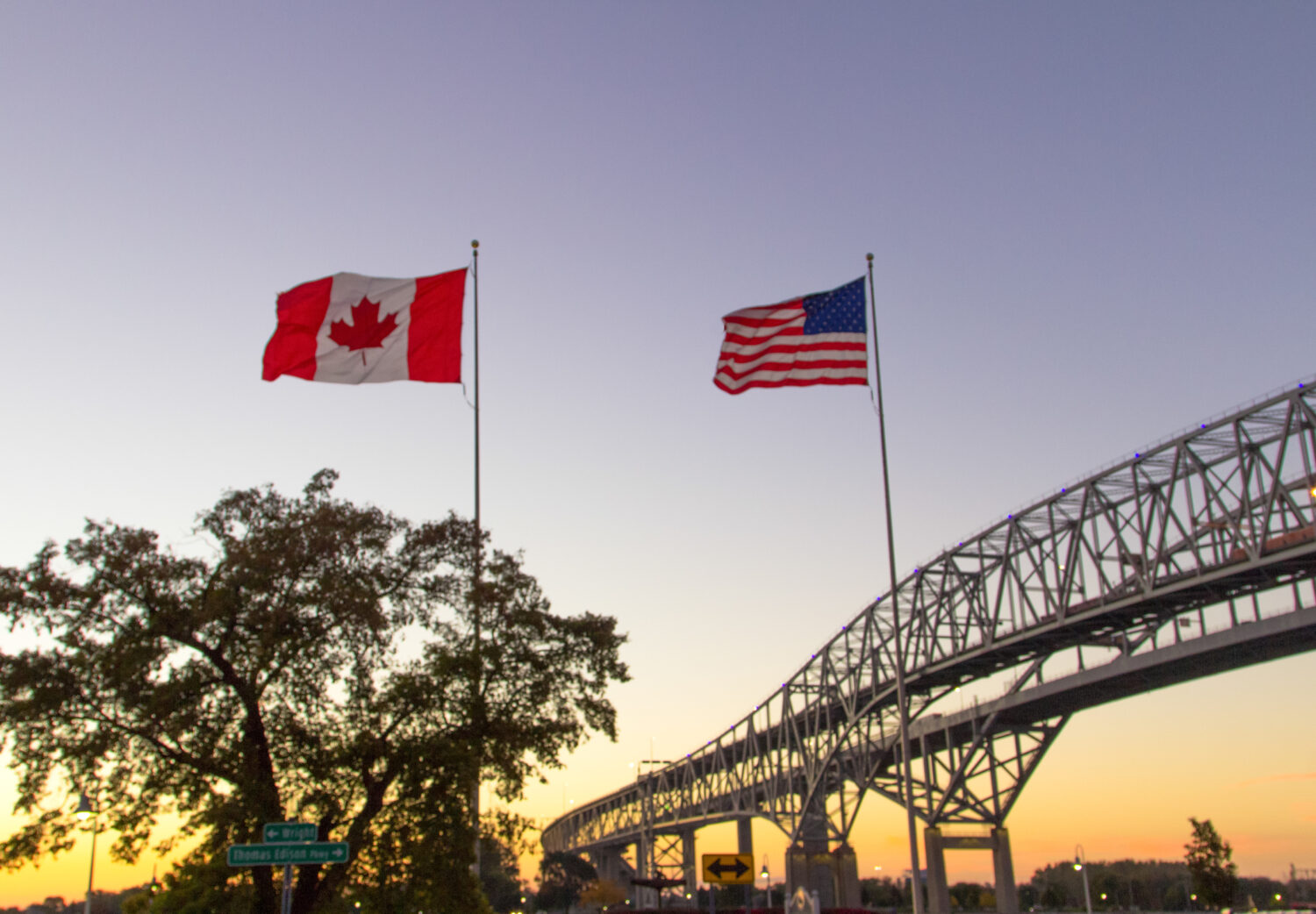
US / Canada border closes for non-essential traffic
To stop the spread of COVID-19, the US and Canada have agreed to close the border to non-essential crossings, freeing up time and space for cargo to move swiftly between the two as a reduction in vehicle crossings enables trucks to move faster. Drivers and essential workers who travel between the two countries aren’t being impacted in this closure as cargo, especially concerning the medical equipment and supplies are in desperate need. With the reduction in passenger flights this month and the delays in ocean cargo, some forwarders are relying on truck freight to move cargo up into Canada to catch the belly space of passenger flights that are still moving by Canadian airports. Air freight capacity in the US has reached a crunch point driving rates and spot quotes higher than expected as precious belly space is down to nil. Drivers aren’t being held at the border longer than necessary so long as they have a valid work permit which settles fears that drivers would be stuck in one country or the other after making deliveries. The free flow of cargo between the nations is critical to keeping people supplied during quarantines, especially now in the US as supplies in stores dwindle amid panic buying and scarcity. The vicious circle of no goods on shelves leading to buy outs of whatever supplies manage to arrive leading to no goods on shelves, has forced retailers to put strict purchase controls into place to ensure the most vulnerable customers are able to get supplies before selling out. Some have instituted maximum counts of essential products while others are opening early for seniors and those with disabilities. If you have concerns about your cross-border cargo, or the supply chain of your industry, we’re available by phone to answer your questions and provide creative solutions to get you through this complicated time in global logistics. We encourage you to reach out to your Nelson representative for our advice and council.

Passenger travel from Europe halted
Last night the President’s announced that the United States, effective Friday March 13, 2020 will suspend and limit entry into the United States for immigrants or non-immigrants who were physically present within the Schengen Area* during the 14-day period preceding their entry or attempted entry into the United States for thirty days. There are exemptions to this including passengers from the UK, US residents and air and sea crew members, which luckily includes air freight flying on all-cargo or freighter airlines. However, a great deal of cargo is moved in the belly space of passenger airlines, especially between the United States and Europe, so capacity will dramatically tighten. There are alternative options including routing cargo via Canada which remains open, though this option will increase the transit time. Market concerns aside for a moment, many logistics providers are offering options to curtail the spread of the virus while still providing services including visual proof of delivery via photo instead of signature, internet based meetings via websites offering visual and group options to fit almost any needs for the time being without depending on contact. More companies are working from home, preferring to take a few days now and not a few weeks / months later if things get worse.The best advice is still to avoid large gatherings (not very difficult as more and more events are being cancelled every day), keep your hands clean (and off your face) and safely check on your older friends and relatives. The CDC has excellent resources on how to avoid transmission. In all seriousness, we at Nelson International are working hard to keep your cargo moving and safe during this situation. * The 26 Schengen countries are: Austria, Belgium, Czech Republic, Denmark, Estonia, Finland, France, Germany, Greece, Hungary, Iceland, Italy, Latvia, Liechtenstein, Lithuania, Luxembourg, Malta, Netherlands, Norway, Poland, Portugal, Slovakia, Slovenia, Spain, Sweden, and Switzerland.

Virus causes equipment shortages
The outbreak of Coronavirus in China has created an equipment shortage as blanked sailings, quarantines, labor shortages see equipment pile up in ports with no ships to board. Regardless of how fast items are coming off the assembly line, without containers to load them in and truckers to drive them to the port, they can’t get to their destination without delays. Though cargo is being rerouted as best it can among available ports remaining open, we’re seeing a shortage of reefer containers popping up as more cargo reaches the port and waits for a ship to finally return to pick up the containers. Even the rerouting can’t compensate as the same containers are moving with many still stalled waiting for pick up at congested ports in China. While ports on the US East Coast have yet to feel the pinch of fewer containers arriving from China, the Midwest farmers growing soy beans are seeing the lack beginning. While the West Coast, and Central Valley growers especially, are worried that there may not be enough reefer containers on hand to manage their export needs. With more than 80 blanked sailings in the last three weeks, exports from China are at a painful low, seeing few commodities leave and containers piling up. As such, reefer containers, which need to be plugged in at the port, are refused because there are no charging stations left for them in the yard. Carriers have started to notify shippers of the shortage with few details about when relief can be expected. For now, rerouting cargo and equipment work-arounds are keeping the schedule manageable, but until shipments resume in full, it’s going to be best to book equipment as early as possible to avoid delays and be aware of any issues that could arise. If you’re concerned about delays or you need specialized equipment for your cargo, don’t hesitate to reach out to your Nelson International representative for support. We’re here to offer sophisticated solutions to all of your cargo and equipment needs!

Coronavirus causes concerns
More information comes in every day regarding the Coronavirus outbreak in China. Cases have found their way to various other cities around the world and the WHO has declared the official name to be COVID-19. The impact on the logistics industry cannot be overstated at this time. Dozens of blanked sailings, cancelled flights, quarantine areas disrupting transportation and general caution have cargo and passengers stuck in a limbo awaiting clearance and confirmation that shipping will normalize and the threat will be managed. Blanked and voided sailings have surfaced over the last week to match the drop in demand for Chinese exports. Also, considering factories have been shut down for both Lunar New Year celebrations and then quarantine. Below, you can find links to service changes for ocean cargo: Maersk CMA-CGM ONE Hapag-Lloyd Evergreen APL MSC Air Cargo demand has fallen off as well with flights being cancelled and cargo capacity squoze tight on flights that are moving. Depending on the length and severity of the final impact of this outbreak, capacity could remain very tight as airlines play catch-up with their cargo once ports return to normal. We’ll be keeping an eye on this and will update accordingly.

President announces steel and aluminum derivative tariffs
President Trump has announced new tariffs on steel and aluminum derivative products at 25% and 10% respectively. While the initial tariffs on the raw materials impose in March 2018, these new tariffs will cover approximately $500 million in goods. Their implication is that the initial raw materials tariffs caused prices to increase on manufactured goods, which will now include tariffs to offset the first set. Simple, right? The Hill kindly included this quote from Chad Bowen, a trade expert at the Peterson Institute for International Economics in Washington to explain. “This latest action was significant because, explicitly for the first time, Trump was imposing new tariffs to help an industry suffering because of his previous tariffs.” The Hill, Nev Ellis, 02/06/2020 “Trump stirs trade concerns with new tariffs on metals” These tariffs will deeply impact the trade agreement in place with China as the Phase One deal only impacted half of the list 4 tariffs. Beginning at 12:01 AM ET on February 8th we will see the imposition of Section 232 duties. These duties will apply to eligible products and HTS numbers from all countries except Argentina, Australia, Brazil, Canada, Mexico, and South Korea. It’s expected that these tariffs will help improve the trade imbalance in the manufacturing sector as almost $72 billion in Chinese imports will be impacted. This might prove to be untentable as the shutdown looms for the Chinese New Year slowdown. While initial responses to these tariffs weren’t positive, US steel and aluminum sectors saw fast increases after the announcement, providing some support to the rational behind the new tariffs. As always we’ll be in waiting mode until we see if this is secretly genius or just a Band-Aid on a bullet wound. The full text of the President’s proclamation can be found Here. We’ll update this page with further information as it becomes available.
US and China sign Phase One agreement
On January 15, 2020 President Trump and Vice Premier Liu He signed the preliminary “Phase One” agreement, culminating more than a year of negotiations, tariff increases and dead ends. The agreement sees Chinese purchases of US Agriculture in exchange for a reduction on the list 4b tariffs from 15% to 7.5%. Also covered are banking regulations and anti-counterfeiting measures that now have enforceable penalties for offenders. China has agreed to buy $200 billion in US goods and services over the next two years, including $12.5 billion in agriculture in 2020 and $19.5 billion in agriculture in 2021. The agriculture products pork, soy beans, cotton, and wheat are the most in demand on this agreement with pork being even more crucial as China faces a shortage this year since African Swine Flu crippled the population of hogs in China. The negotiations are far from over, even though there has been a signing. The first three lists of tariffs haven’t been reduced or cancelled and goods are still being charged upwards of 25% in some cases. There are issues with intellectual property rights and banking that haven’t been dealt with and will need to be addressed at a later date. China is one of the biggest offenders of intellectual property theft and their banking regulations set up an often unfair playing field in favor of national companies and not foreign entities. We expect to hear more after February 15th, considering that’s a week past the Chinese New Year and the day the list 4b tariffs will be halved. We’ll keep an eye on this situation to bring the most current news to our readership.
USMCA reaches a snag over labor
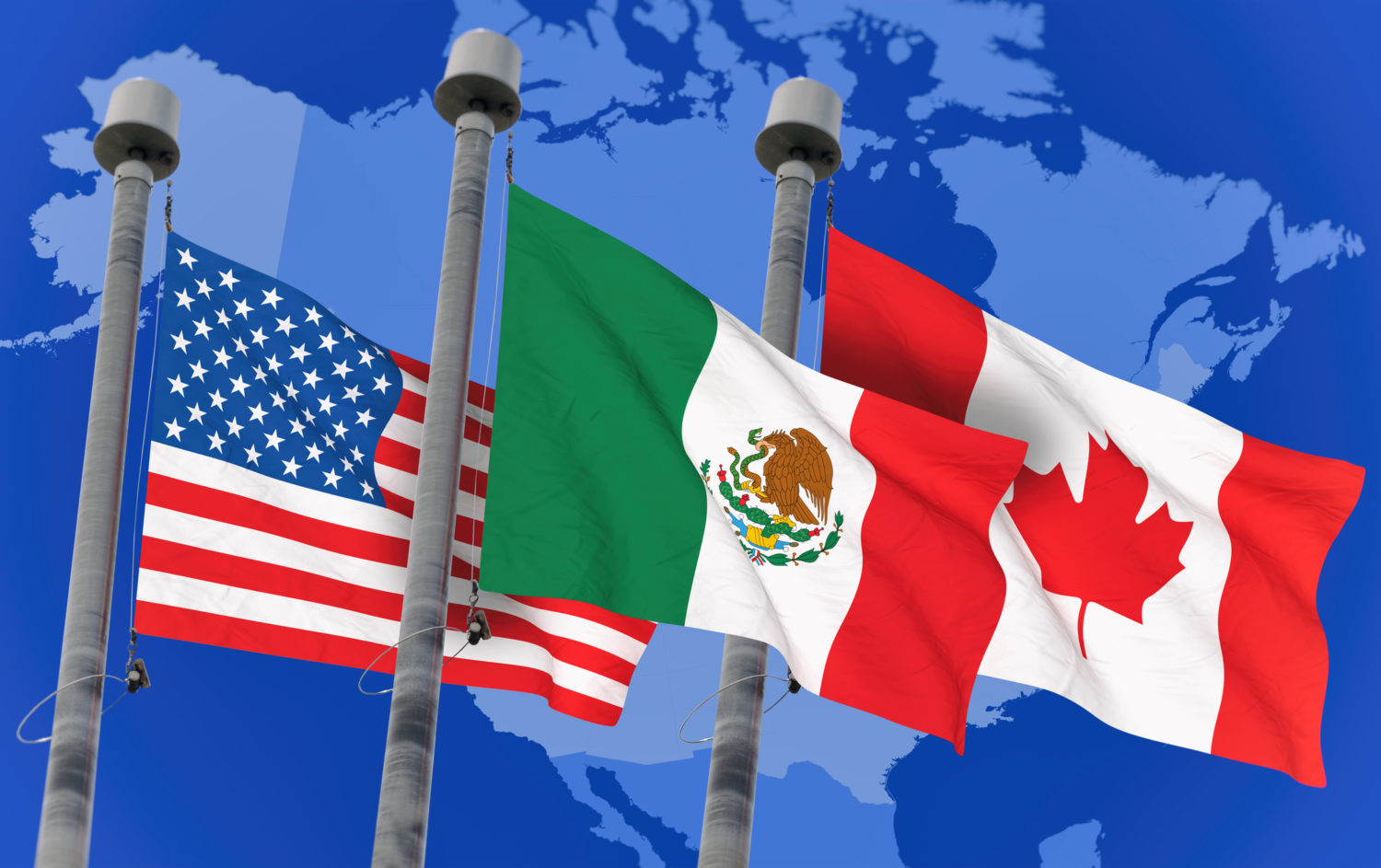
After months of negotiations it looks like the USMCA trade agreement could be almost finished. Governments on both sides, including an initially reluctant democrat controlled house, have come together with only one final issue. Labor concerns over the treatment of workers in Mexico have pushed lawmakers to include the option to have US inspectors on site in Mexican manufacturers to ensure all labor stipulations are in compliance. Sufficed to say the Mexican government is unenthusiastic about the idea. “Mexico will NEVER accept any measure that would see inspectors disguised for a simple reason: Mexican law prohibits it,” Mexico’s deputy foreign minister for North America, Jesus Seade tweeted. Authorities would rather use the laws of each nation to ensure compliance without international policing of implementation. Passing the USMCA will modernize the 25 year old original North American Free Trade Agreement (NAFTA) which was implemented on January 1, 1994; four years before the birth of Google; twelve years before the first tweet on Twitter; the same year Friends debuted on NBC and a small online bookseller named Amazon started. Pop culture trivia aside, the explosion of e-commerce, internet-based communications and manufacturing automation that’s exploded in the years since demands a revision. This important legislation has been brought together by government, labor leaders, business liaisons and both sides of the political spectrum to move the process along and ensure passage in both the House of Representatives and Senate. More than twelve million American jobs depend on the trillion dollar trade lanes in North America. Once the solution is developed, all parties expect to see the partnerships grow even larger.
US and China reach phase one agreement
Just announced this morning, the United State and China have come to a “phase one” agreement. After months of tit-for-tat increases and false starts, both sides have settled on a solution that will prevent the December 15th implementation on List 4B and reduce the List 4A tariffs to 7.5% from the initial !5% levels. “The Penalty Tariffs set for December 15th will not be charged because of the fact that we made the deal. We will begin negotiations on the Phase Two Deal immediately, rather than waiting until after the 2020 Election,” explained President Trump. Other changes include reforms to China’s policies regarding intellectual property and currency manipulations, key points in addition to an increase in agricultural buys that have been a hot button issue across months of negotiations. “The phase one agreement also includes a commitment by China that it will make substantial additional purchases of U.S. goods and services in the coming years,” said the United States Trade Representative, Robert Lighthizer. “Importantly, the agreement establishes a strong dispute resolution system that ensures prompt and effective implementation and enforcement.” We’ll keep monitoring the announcements of this agreement and bring more information as it becomes available.
CTPAT updates in January
Effective on January 1, 2020, the minimum security criteria for members of CTPAT will be updated. The changes are not openly available to the general public for security reasons, but members can view the full set of updates via CTPAT’s online portal. New criteria will cover the following areas: Management’s continued commitment to a culture of security throughout the organization Cyber security and protection for social engineering threats regarding the trade data they store or exchanges throughout the supply chain Agricultural security against contamination and pests across borders Financial protection and prevention of money laundering and terrorism financing in trade areas Members are advised to work with their partners, suppliers, factories and representatives to determine who might need to invest in security or technology upgrades to remain compliant in the new criteria across the whole of the supply chain. Look at the current level of compliance and update as fit to cover the new criteria. US Customs and Border Patrol suggests that members start immediately, preparing and implementing the updates and new criteria to be ready for 2020, even if they aren’t scheduled for a validation in 2020. It’s crucial to start early with training and upgrades so there is nothing hanging over the new year. We at Everglory are working diligently to be ready well in advance of the deadline in an effort to protect our standing and be prepared for the first day of 2020. We agree with the directive that all members of CTPAT should communicate openly with all partners to ensure everyone in the supply chain is ready to work together to protect against terrorism. STR Trade advises the following implementation schedule via CBP for members to start working towards compliance: CTPAT members will have the rest of 2019 to implement the new MSC internally, and CBP recommends that they do so under the following phased approach. Phase 1 – cybersecurity, conveyance and IIT security, and seal security Phase 2 – education, training, and awareness; business partner security; risk assessment Phase 3 – security vision and responsibility, physical security, physical access controls Phase 4 – agricultural security, personnel security, procedural security We encourage everyone to take the necessary steps to get ready for these updates.
