


In order to prepare for the Olympic Games, more than 6,000 containers, holding almost 30 million items needed to arrive in Rio de Janeiro, Brazil. Among the three categories of cargo bound for the games (event equipment, technology, and furniture) nearly 70% needed to arrive by ocean carrier into a country with an average documentation time of 146 hours; 93 hours is the average for Latin America and the Caribbean. While we often focus on the calamities that occur in a world-wide spectacle, the actual creation of the Olympic Games and the 2014 World Cup ushered in new and streamlined approaches to customs. In addition to beds and mattresses (40,000 of each), 450 tons of timekeeping equipment (including 125 miles of cable and 414 scoreboards), high security fluid samples from the athlete’s (in order to maintain anti-doping compliance), and the firearms needed for team shooting Olympic events, Emirates SkyCargo transported 310 horses from 5 hubs (for forty-three competing nations), along with feed, handlers, and veterinarians to Rio. A BRL 2 billion ($628 million) infrastructure investment, which included BRL 1 million ($312,000) ramp expansion to connect with transport trucks in the airport helped prevent delays while unloading the animals for competition at the Olympic Equestrian Centre in Deodoro Olympic Park. “You’ve got to provide the best conditions for your [animal] athletes,” said Martin Atock, managing director of Peden Bloodstock GmbH, a German company that has handled Olympics horse transport since the 1976 Montreal games. “We’re delivering horses in peak competition fitness, and we can only do that if we offer optimal conditions.” Horror stories loomed as large among logistics professionals as the rumors of rampant Zika and unclean water did in the general news. Notoriously difficult and exacting in their standards, Brazilian imports are susceptible to a BRL5000 fine for discrepancies and only in July adopted the ATA Carnet system to ease import restrictions on temporary entries. The adaptation helps maintain a same day turn around for Olympic cargo imports. The ATA Carnet acts as a merchandise passport to ease restrictions on temporary goods for trade shows, samples or professional equipment so they can enter countries tax and duty-free. It should be noted that Brazil’s department of revenue is the governing agency for Brazilian customs. In 2014, Adriano de Souza, who was poised to become the 2015 World Surf Champion, had his competition surfboards seized and held at Rio’s airport for nonpayment of taxes. Though athletes who travel with equipment are often exempt, De Souza’s boards were being carried by an associate when they were taken. Brazilian customs refused to return them after De Souza refused to pay and the surfer went on to lose to Tiago Pires while using backup boards at the contest. This wasn’t De Souza’s first altercation with customs: In 2012 Brazilian authorities seized his J-Bay trophy and held it four months.
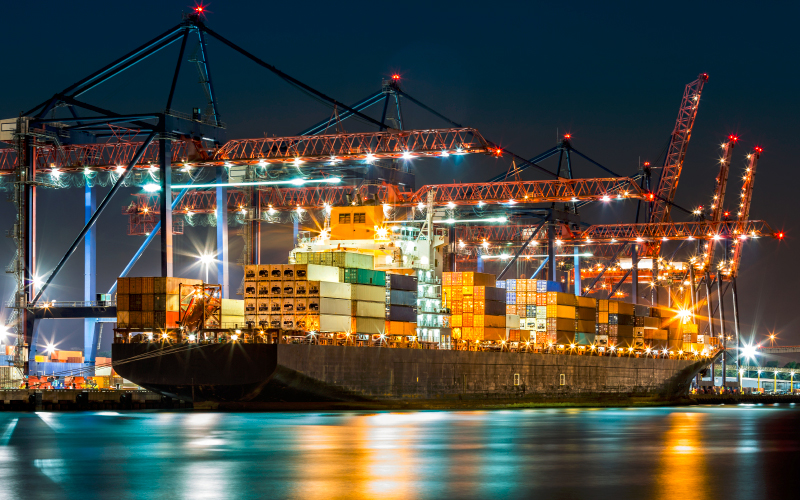
Neo-Panamax MOL Benefactor calls Port of Virginia
Only weeks since the Panama Canal expansion was completed and ships again started passing through the legendary waterway. Before the historic reopening, 100 neo-Panamax vessels had reservations for commercial transit through the locks, which are wider than the old ones, 180 feet vs. 110 feet, and are deeper, too, at 60 feet vs. 42 feet. The ability to move supersize ships through the Panama Canal has given rise to concerns about which U.S. ports will be able to handle the massive vessels. As the Panama Canal can greatly reduce the cost of shipping cargo from Asia to the U.S. west coast and then onto the eastern U.S., many east coast ports are preparing to accept neo-Panamax ships. Cargo arriving on the west coast can cost over $2000 to rail move to the east coast. The cost is closer to $600 (with fewer chances for port delays that frequent the west coast) when a ship docks at an east coast port and moves by truck to the destination. The MOL Benefactor, which passed through the expanded Panama Canal on July 1st, called the Port of Norfolk on July 11th, arriving from the Port of New York. With a capacity of 10,000 TEUs, the Benefactor is the first neo-Panamax to traverse the canal and the largest ship ever to call the Port of Virginia at 1,105’ long and 158’ wide. Norfolk Mayor Kenny Alexander says, “Our port is one of the preferred ports because of the ability to get goods to the marketplace faster as well as to ship from our ports to other global markets,” Alexander said. “[This is] a testament to the trade and business climate here in Virginia and our port, and we look forward to more of those ships coming to the Port of Virginia.”

SOLAS Takes Effect Seamlessly.
As SOLAS took effect on July 1st, ports around the country are moving together with shippers and exporters to create a steady and efficient process to alleviate any growing pains from the rules. According to the JOC, “U.S. maritime regulators gave the go-ahead that allows a group of six East and Gulf coast ports and 19 ocean carriers to develop a common strategy for using existing weighing processes that satisfy federal regulations to meet the new international rule.” The New York-New Jersey Port Authority will also work with container lines among their six ports to accept weights as VGM from their terminal scales. It appears that the camaraderie between ports and communication efforts are paying off around the globe. Russia, Japan, Brazil, India, European ports such as Rotterdam and Antwerp, and US ports all reported light traffic and smooth operations upon the first implement of the rule. According to Chief Port Operations Officer Jeff Davis, Port of Houston, “We haven’t turned any trucks away. We haven’t had any boxes miss the ship. So far the new rule has no impact on cargo operations, and it hasn’t slowed our gates.” This sentiment was echoed by the Port of Charleston and California’s many ports. “It’s been easy for us, we barely noticed it. We were concerned when we received the rules, but the ports and terminals have made the transition very seamless. It has been easy for shippers and forwarders to comply,” stated one east coast ocean cargo director. The light traffic of a holiday weekend at the end of a quarter has greatly assisted the implementation of the law and coupled with intense preparation and scrutiny, shippers and ports are not experiencing any of the issues that could have arisen to delay traffic. “The cargo appears to be moving,” said Bryn Heimbeck, founder and CEO of Trade Tech, which created a mobile software program to help shippers file SOLAS data. “The phones are not ringing off the hook, with people panicked about transmissions that they have made and rejections at the terminals. That we are not seeing. But it’s only 24 hours, so it’s very hard to say.”

East Coast Ports Slow in May, Await SOLAS on July 1
With less than two weeks remaining before the implementation of the Safety of Life At Sea (SOLAS) measures, and coming through a powerful first quarter, East Coast ports, including the Port of Virginia, show a decrease in container traffic for May. At the Port of Virginia, 219,398 TEUs moved at a 4.8% drop from May 2015 (230,511 TEUs). However, the port showed an increase in rail (+8.3%) and barge traffic, though truck moves (-1.2%) still accounted for almost two-thirds with 33% from the rail and 3% of traffic moving by barge. Slowing in May was expected as the record-breaking numbers from 2015 reflected an inflation of containers that were diverted away from West Coast Ports that were at a standstill from labor disputes. Reports show that the July-June FY2016 show steady, moderate growth at +2.6% and the calendar year 2016 from January to June increase of 2% in handled TEUs. May TEU volume at the ports of Savannah, Georgia, and Charleston, South Carolina, also fell, year over year: by 7.3% in Savannah and by 2.2% in Charleston. The Port Authorities of Georgia, Houston, Massachusetts, North Carolina, South Carolina, and Virginia have requested involvement in the discussion of how to best use OSHA standards of weight to comply with the VGM requirement since they control their own terminal operations. The port authorities of Georgia, Virginia, North Carolina and South Carolina have all said they will offer free container weighing services so their shippers will be in compliance. As these ports have been weighing containers to comply with OSHA, they expect no delays or increases in cost once the mandate takes effect.
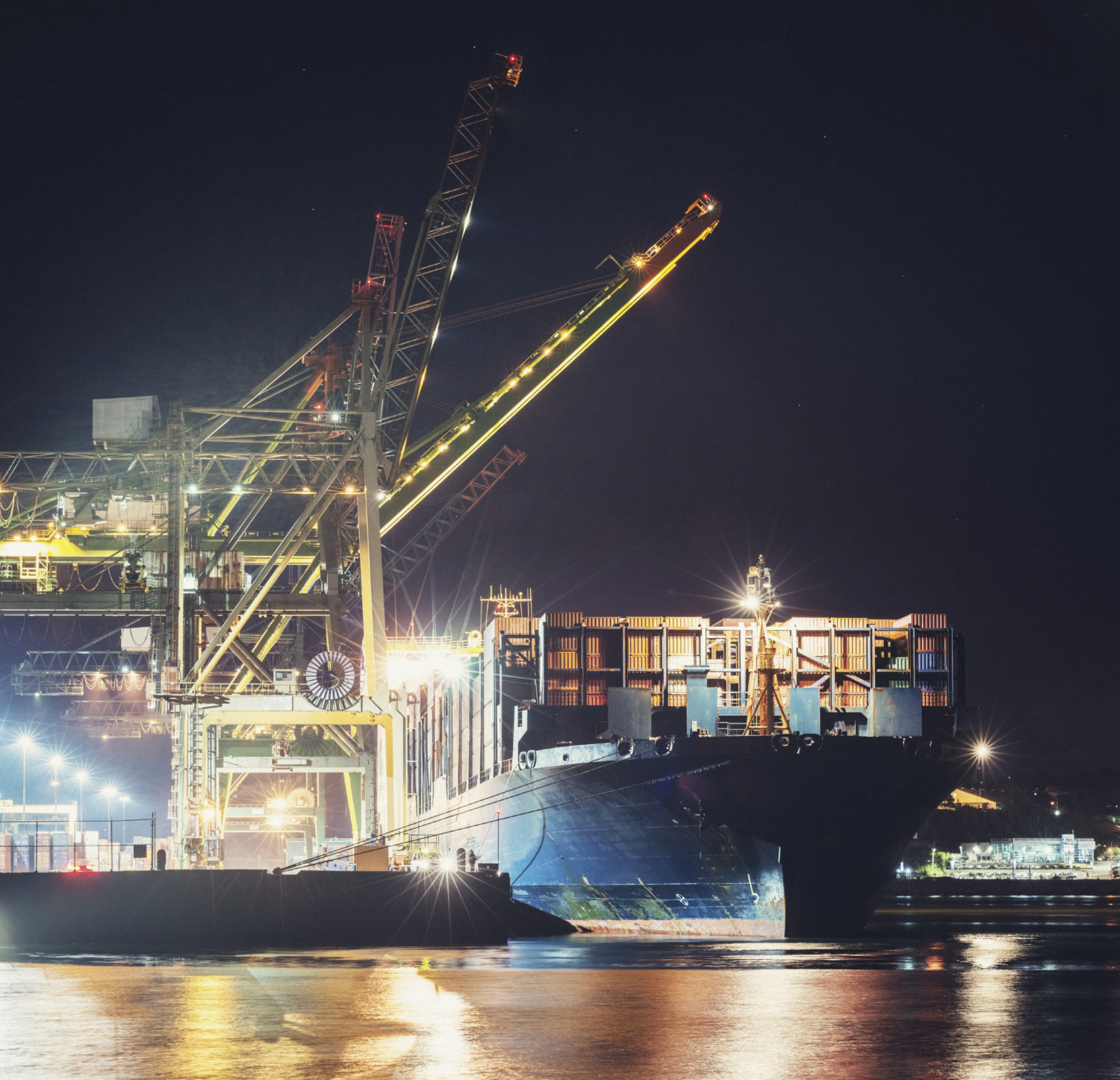
Virginia Port Authority Will Offer VGM Weight to Exporters
In a bit of a shocking twist, the Virginia Port Authority changed position this week and advised they will provide VGM weights to exporters to comply with the SOLAS rules. The Virginia Port Authority revised their approach to the SOLAS container weight mandate to remain competitive among east coast ports and help shippers transition seamlessly. “We have listened to customers’ concerns, and are mindful of the potential impacts to their supply chain,” John Reinhart, Virginia port director and chief executive officer, said in a statement Tuesday. “Providing weights, as we have always done, to line operators will keep our throughput high, allay our export customers’ concerns and help ensure the safety of mariners.” The South Carolina Ports Authority reported a 2.8% increase in TEUs moved to date, handling 1.6 million since July 2015. Moving 157,959 TEUs in April, the Port Authority reports year-to-date container volume at 631,753 TEUs. SCPA is finalizing a solution to the Safety of Life at Sea (SOLAS) regulations to provide complimentary weights from certified scales as verified gross mass (VGM) directly to shipping lines as contemplated by Coast Guard rules. The port plans to forgo the $25 fee for direct provision of weights to shippers. Along with South Carolina, North Carolina’s Port of Wilmington will offer container weights, though these won’t be VGM verifiable. As they have been weighing all containers to comply with OSHA regulations, the new requirements will not cause any increase to work load or operational procedures. “We’ve always provided this to our customers on export loads even prior to SOLAS implementation. We do this today and will continue to offer as a cost-free service to customers after SOLAS implementation,” Cliff Pyron, a spokesman for the North Carolina State Ports Authority, told JOC.com. “The NCSPA will accept and receive containers into our terminal without VGM after the SOLAS regulation takes effect,” the port authority said in a statement. “As practiced today, the NCSPA will continue to offer a gross weight to our carriers. These gross weights may not however be consistent with the method of calculation as described in SOLAS,” the port authority has warned. “As such the VGM will be the responsibility of the shipper to certify in compliance with the regulations as required in SOLAS to the carrier.”
Container Lines May Ease SOLAS Burden
This past week a group of 19 container lines stated that ocean export customers will not be held legally liable for any inaccuracies regarding the container tare weights in a VGM. Under the SOLAS laws, in effect July 1st, shippers must report a Verified Gross Mass of the total weight of a container, including cargo, packaging, bracing and the weight of the container itself. Shippers are concerned because there are only two known ways to accurately produce a VGM. Either the shipper can weigh the cargo, packaging and materials and add to the tare of the container, or the entire box as a whole can be weighed and reported. Weighing the entire container is just not feasible for smaller shippers who can’t load such an enormous box on a scale at their loading facility. Therefore, having a verifiable tare weight and a party responsible for that weight being accurate is a burden shippers are not excited to carry. As the U.S. Coast Guard announced in April that more than one method was acceptable to use for completing a VGM, the guide that shippers can be responsible for contents while the container tare can be verified by the carrier as the shipper should not assume liability for equipment that they don’t own, control, or manage. Jeff Lawrence, OCEMA’s executive director, said the Coast Guard stressed that complying with the rule was a business process and noted that the agency didn’t endorse any approach of submitting the declaration. “We will continue to work with ports and terminals to find solutions to make the VGM process more efficient and streamlined,” he said.

Port of Virginia Will Not Offer VGW Service
The Port of Virginia has determined that they will not accept containers without a VGW come July 1st , as the new SOLAS mandate goes into effect. Though we have no update from the rail lines that carry many containers into the port as to how they will handle loaded boxes without a VGW, ports around the country are stating they will refuse to accept containers that were not electronically reported before arrival. However, the Port of Virginia is only approximately 250 miles from the one United States port that has offered container weight services, for a fee. The Port of Baltimore, just yesterday, has become the first port to offer weighing service and an agreement to accept containers that arrive without a VGW. Baltimore will have both on- and off-site weigh stations to provide a VGW, though the fee for such service has not yet been disclosed. While this is good news for companies that need a gross weight for containers, there is a second option still on the table. Shippers still have the option to take the individual weights for all loaded cargo that’s inside the container, including packaging, bracing, and incidentals, added to the tare of the container itself and then report that as the VGW to the port. Though fees for non-compliance and returned/unloaded cargo haven’t been advised, and the question of how aggressively maritime agencies will police the VGW is still unanswered, we must strongly advise all shippers who load full containers for ocean shipment to be vigilant with their information. Nelson International will be standing by at the ready to talk about ways we can seamlessly transition into compliance and ensure our shippers are above reproach. We expect your questions and encourage them as laws become more clearly defined.
Port of Virginia Posts 2nd Best March
Though total container volume for March has fallen 7.2%, the Port of Virginia states this is the second best March total on record with 120,519 TEUs. The fall is attributed to an outstanding March of 2015 where inclement weather at the end of February caused extreme delays and outbound cargo was held until the following month, inflating the totals. This, coupled with the West Coast port congestion and labor disruptions, made March 2015 hard to beat this year. However the fall was not drastic and the solid numbers show volumes are steady and service times are fast improving. “We are forecasting modest growth for the balance of the year, so our focus will be on service, cost-control, and implementing critical infrastructure improvement,” John Reinhart, executive director of the Virginia Port Authority, said in a statement. Also in March the Port of Virginia set a new record for rail cargo as they processed 46,000 containers which was 39% of the total container traffic. “Our message about the strength of our rail connections to critical Midwest markets is resonating with the market,” Reinhart said. “Rail volume at the port is up 15% and 10% for the calendar and fiscal year, respectively.” Coupled with the strong rail business, Virginia Inland Port (VIP) and Richmond Marine Terminal (RMT) also grew in March, wildly passing numbers from March 2015. Container volume at RMT increased by 58% and VIP increased 45% over numbers from March of last year. “Since Richmond Marine Terminal has been under our management, this is the first month that volumes there have exceeded 2,000 units,” Reinhart said. “Richmond and the inland port are showing their capabilities and potential and they will be vital as we go forward with our plans to significantly increase capacity at our primary, deep-water terminals over the next three to four years.” As the Port of Virginia solidifies its place as a powerhouse port on the East Coast, Nelson International is in a perfect location to handle even the most complex ocean cargo. We’re ready and excited to see how the infrastructure improvements and dredging expands our port and allows access to the bigger ships sailing this summer. Please contact us if you have any questions about your ocean cargo.
SOLAS Mandates for Shippers Using a Forwarder
In many cases, as a forwarder, agent, or NVOCC, the shipper of record on an FCL shipment is not the loading party of the container. Containers are loaded, braced, and sealed away from the location of the forwarder, who documents the shipment based on information given by the actual shipper, as the party that stuffs and seals the container. The forwarder then acts as the shipper of record upon the bill of lading and is responsible for obtaining and conveying information and documentation to the carrier on behalf of the original shipper. With the new SOLAS mandate taking effect on July 1st, those containers will need to be weighted in one of two ways: either the shipper can weigh the entire loaded container as one gross weight, or the individual pieces, bracing, etc., can be weighed and added to the containers tare weight and reported as a whole gross weight. Here is a very important significance: the containers must show an actual and verifiable weight and those that do not will be delayed until one can be obtained. As the mandate looms over the summer, we are aware of how complex this can be if the container loaders do not have access to a scale and crane that can weigh the whole container as one piece. There is great confusion about allowable tolerances for discrepancies and penalties for potential non-compliance, but the individual weights of all items allowed seem to be the fastest and easiest way for shippers to comply. A breakdown of laws by countries that was made available by Worldshipping.org only shows 10 out of 162 signatories have guidelines available. We advise our customers to proceed with compliance as to produce an accurate VGW with weight totals if the gross container cannot be weighed on site. Due to the confusion still surrounding the new laws, we expect to continue to produce more information as clarification happens. This is an on-going issue that Nelson international is following closely and will provide more information to our readers and customers as it becomes available. If you have any questions or concerns, please contact us.
Virginia General Assembly Approves $350m for NIT
The state of Virginia has approved a $350 million state-backed bond deal to the Norfolk International Terminal. Pending signature of Governor McAuliffe, the bill’s primary supporter, the money looks to expand the facility after 2015 traffic congested the port almost to a shut down. As the year progressed and traffic tripled, the port showed a profit for the first time in seven years, assuaging concerns that investments would falter as competition on the East Coast grows. As first reported by us in December the NIT has been searching for ways to expand its services and operations to compete with other east coast ports that are also spending heavily to shore up infrastructure and accept the post-Panamax megaships that are coming this year. At this point, Norfolk and Miami are the only two southeastern terminals that can accommodate. In the request, they advised the money would enable NIT to handle more than 2 million containers annually by 2019, a 35% increase over current capacity of 1.4 million. Alongside this growth NIT wants to finalize a 50-year lease extension of Virginia International Gateway which may assist the Port of Virginia in acquiring the privately owned marine container terminal, located on the Elizabeth River in Portsmouth. The original lease, 2010-2030, was expected to surpass $1 billion revenue from payments, and the extension will see the rents rise to help pay for the $320 million cost to expand to double current capacity. The General Assembly enacted a provision in the budget that would let the Port Authority access a maximum of $10 million a year in Commonwealth Port Fund resources to offset those higher rent payments. This shows the deep and important commitment that the Commonwealth of Virginia and General Assembly has to our ports and growth, both as a means of state capital and a jobs hub. We expect another profitable year and the continuation of growth throughout this decade.
