

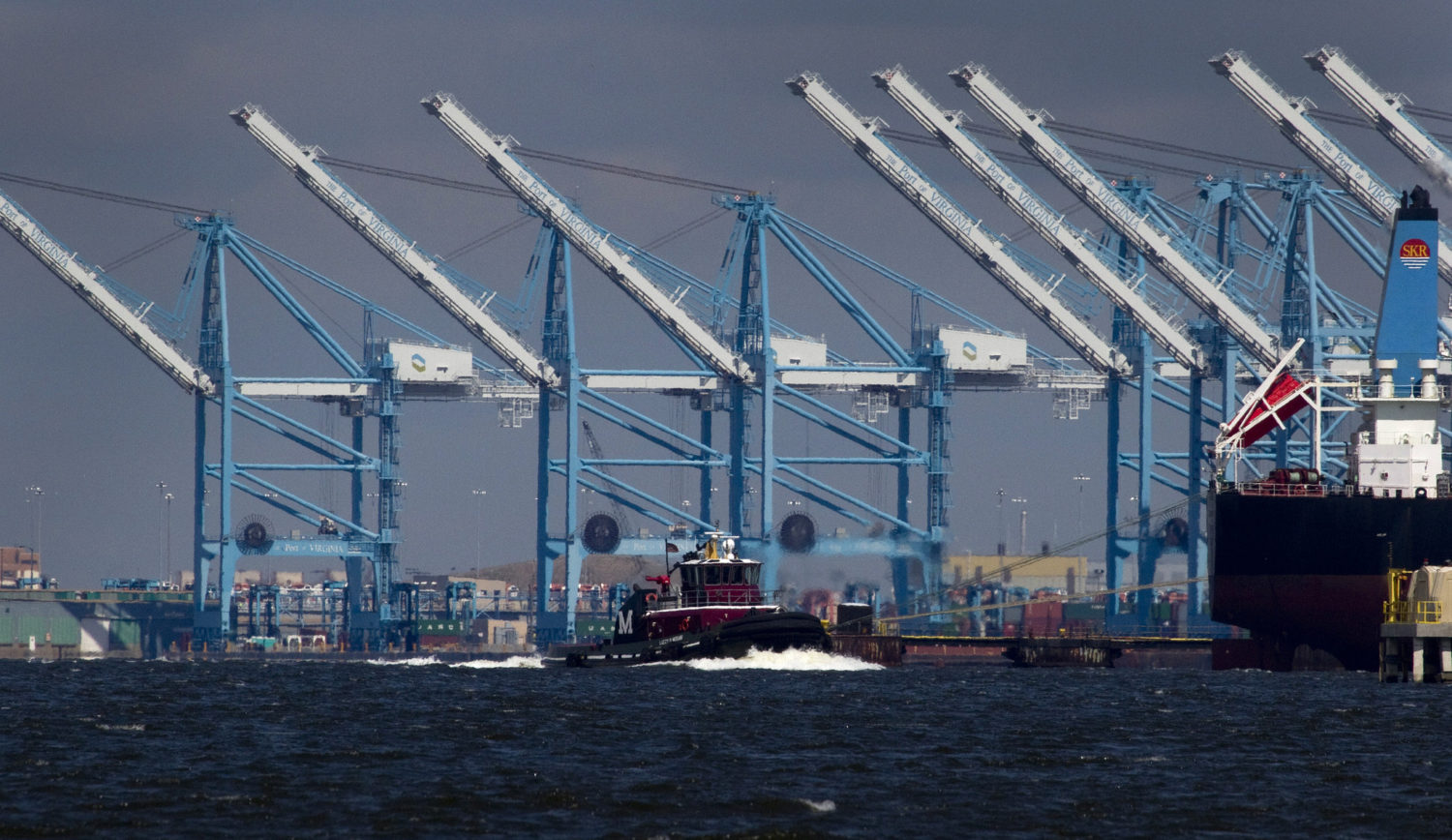
Commercial container ports expect to see a 4.6 percent rise in imports for the first half of 2017, over the same time period in 2016. As the nation’s economy continues to grow, retail sales are expected to carry over strongly across the import industry from the holiday season. As the federal government has promised to devote $1 trillion to infrastructure, ports are feeling more confident. Mid-size ports are especially interested as they begin undertaking plans to expand and deepen their current harbors to accommodate Post-Panamax vessels carrying more than 10,000 TEUs. Larger ports like Long Beach and New York and New Jersey have completed work on the basic dredging and expansions and now focus strongly on the rail, yard and technology improvements they’ll need to stay competitive as smaller ports begin growing. Steady increases in imports during a strengthening economy could assist ports in acquiring the extra money they need to devote resources to fixing and rehabbing much of the eastern seaboard. Improvements in the economy are following current forecasted trends that show gains in retail spending and consumer sales during 2017. As retailers import more merchandise, it’s an excellent indicator of their expectations for store shelves. Freight forwarders have shown a remarkable adaptation to the uptick of e-commerce in retail sales recently, which certainly accounts for bolstered numbers. As they become more and more comfortable in this emerging market, expectations are that their technology will be next in line for improvements. “The rise of global e-commerce has dramatically increased the number of companies shipping across borders, and although many of those companies have small volume and unsophisticated service needs, it is inevitable that some will need the help of a forwarder or NVO, especially as they grow,” said Eric Johnson, in a special report for American Shipper. With our home Port of Virginia steady improving to become a global powerhouse port on the east coast, we here at Nelson will continue to watch trends and information to ensure you’re shipments are finding the best, cost-effective and time-sensitive journeys we have to offer.

Happy Chinese New Year!
Welcome friends and colleagues to the Year of the Rooster! The Rooster is the tenth sign of the Chinese zodiac, falling in 1933, 1945, 1957, 1969, 1981, 1993, and 2005. As 2017 is the year of the Fire Rooster, according to the Chinese lunar calendar and they’re known for being trustworthy with a strong sense of timekeeping and responsibility at work. All Roosters are said to be attentive and funny, with a zest for living socially as the center of attention. Those born under the sign of the rooster are said to be loyal and devoted friends and co-workers, which is a welcome change after the last year’s monkey mischief. Rooster years bring fresh challenges which inspire practical solutions and a quick wit. This year of the Rooster will have two springs, as the lunar new year of 2017 starts on January 28th and ends on February 15th, the solar calendar begins on February 3rd, which we hope bodes well for the 384 days in this Rooster calendar. This year of the Rooster is said to be a powerful one, with no choice but to move forward. Clear intentions, honesty and effort are the paths to ensure success this year while making sure to avoid risky ventures. All people, regardless of their birth can find great success in a Rooster year by honing their Rooster traits. Stay loyal, work hard and endeavor to persevere throughout 2017. We at Nelson are thrilled for the new challenges and excitement that comes from a fresh new year! You can find your Chinese Zodiac here, and we leave you with this Year of the Rooster poem, reminding everyone that it’s going to be a year of strong preparation and hard work. I am alert Ready to take action The first on the scene The last to leave I take chances But I am precise I know where things belong I am orderly and fastidious Nothing escapes me I am always prepared I never give up or in I AM THE ROOSTER
Carrier Alliances in the New Year
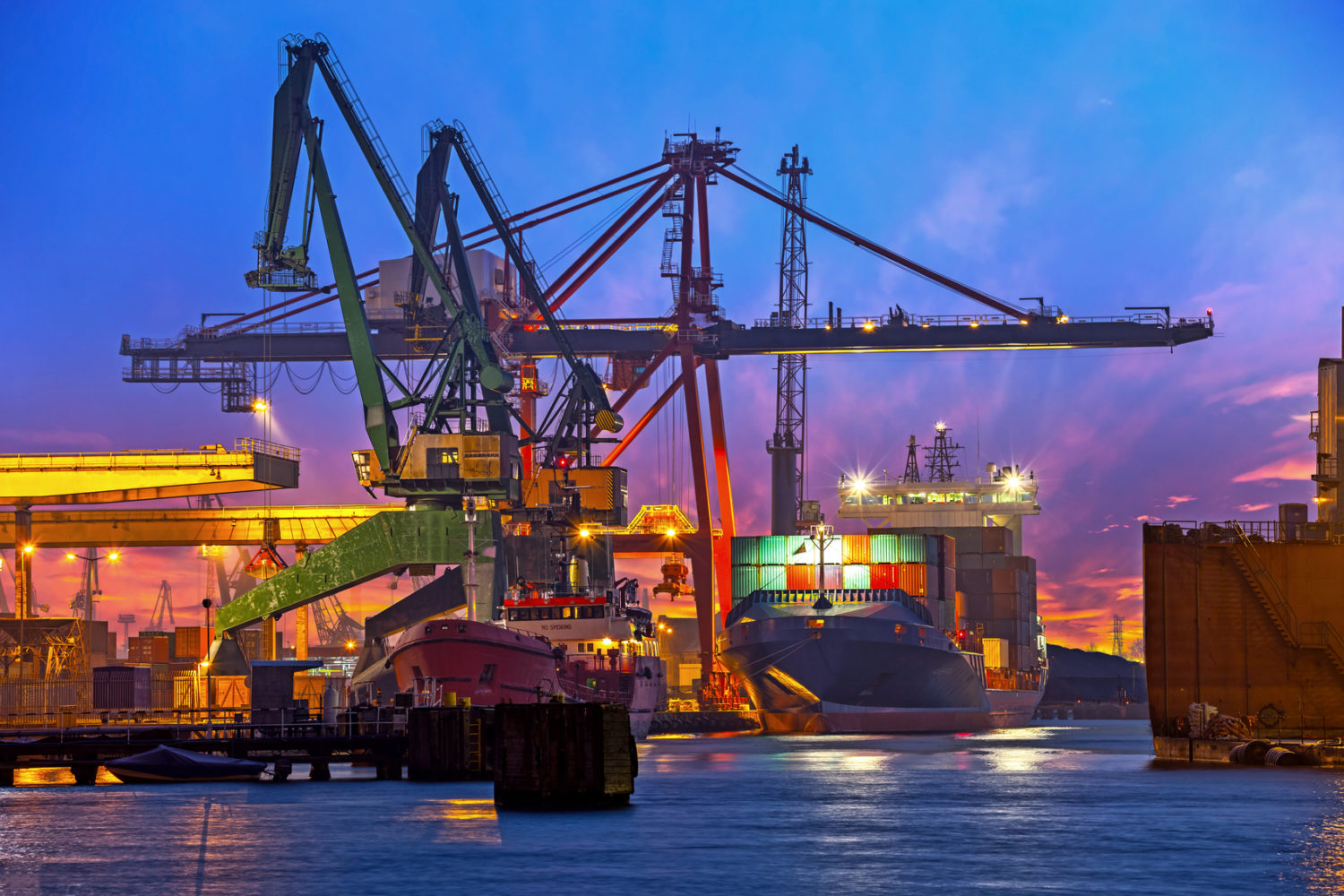
As four of the largest vessel sharing alliances consolidate to become three even more powerful alliances to cut costs and increase leverage, the impact on ports and marine terminals could be enormous. The three major players in these alliances include Ocean Alliance, THE Alliance and 2M Alliance who will start deploying larger ships in April once the alliances go into effect. According to the JOC, the carriers will begin consolidating routes and vessel space which will translate into rate volatility as ports see their cargo volumes either increase or decrease with these consolidations. Ocean Alliance: CMA CGM (includes the acquisition of APL), Cosco Shipping, Evergreen Line and OOCL. THE Alliance: MOL, NYK Line, and “K” Line; Hapag-Lloyd, which includes United Arab Shipping Co.; and Yang Ming. 2M Alliance: Maersk Line (Hamburg Sud) and Mediterranean Shipping, and a slot-sharing agreement with Hyundai Merchant Marine. Ports are expected to feel the greatest impact of the alliance restructuring as these alliances will make use of post-panamax vessels which require taller cranes, additional yard space, expanded gate capacity, and extended gate hours. Operating ports will be responsible for any infrastructure improvements necessary, which have thankfully been initiated by our home Port of Norfolk. “The alliances are spreading the pain to the terminals,” Philip Damas, director of supply chains advisors at London-based consulting and research firm Drewry, told the annual JOC Port Performance North America Conference in Iselin, New Jersey, last month. It’s too early to measure the exact impact on rates and services coming from the arrangements but the alliances are balanced and the incidentals of routing and port calls won’t be noted until vessel sizes and transit times are published, though it is clear that the driving factor is cutting costs and not improving or expanding service if those don’t include an increase in revenue. However, the combination of routes and services with the increased number of vessels in play could help drive down rates in the coming year. Our position with the Port of Norfolk appears to be sound in this new mix of ocean carriers as we continue docking mega-ships and we look forward to working with the new alliances to continue to bring the best rates, services and information to our clients in the New Year.
President-elect Donald Trump’s trade plans take shape.
With the election of Donald J. Trump, the trade industry experienced a bit of a shake up, considering the heated rhetoric of the campaign trail. Though we are still in the very early days of preparation, the map of plans being released show that most forward progression will be business as usual, with a few glaring exceptions. Targets in trade include the Trans Pacific Partnership, the renegotiation of NAFTA, and punitive tariffs for unfair trade practices. While those issues are still being weighed, infrastructure improvements, a strong push to increase exports and the simplification of regulations offer encouragement. Though the US has signed the TPP, it’s been announced that we will not move forward with the agreement at all and there will not be multilateral trade agreements with the administration. They would rather focus on bilateral trade agreements between the US and each individual country. China then becomes a focal point especially when talking about the President-elect has vowed to impose tariffs and restrictions on countries for unfair trade practices. The caveat here is that China acts as a bank, loaning money to the US and holding the bulk of our national debt. The question arises: How do we enforce the suggested tariffs from our current financial position? According to shipping tycoon, John Angelicoussis, who owns the sixth largest shipping fleet, “Shipping lives off China. There will be no winners in a trade war. We should leave them alone and continue to trade.”The Greek shipping magnate expressed confidence in a Trump presidency being a positive for shipping in terms of infrastructure expansion and an increase in fuel prices he predicted would come after the Nov. 30th meeting of OPEC. Mexico seems to be willing to negotiate and modernize NAFTA but any changes would have substantial consequences to brokers and forwarders who do cross border business and could potentially disrupt supply chains that are built around the agreement and interwoven into its laws. This can have deep economic consequences though section 125 of Trade Act of 1974 gives broad authority to the president to withdraw from a trade agreement and increase tariffs and article 2205 of NAFTA states countries can withdraw from NAFTA with 6 months notice from any signatory, which then requires Congress to revise all implementing legislation. That waiting period could provide the US with strong renegotiating power with Canada and Mexico as the exit looms in the future. Considering US based jobs, especially in the manufacturing sector, are a hallmark to this administration and the preceding campaign, we should expect US exports to increase commensurate with job growth and the promised increase in American manufacturing. Other positive opportunities include updates to regulatory agencies and infrastructure improvements across the board. The Airforwarder’s Association has expressed enthusiasm for the $1 trillion infrastructure investment promised by President-elect Trump. AfA’s Executive Director Brandon Fried stated that air forwarders, “wholeheartedly agree with President-elect Trump’s desire to build the next generation of roads, bridges, railway, tunnels, seaports, and airports.” “We understand that President-elect Trump will have many competing objectives in the first 100 days of his administration. We firmly believe that infrastructure investment right out the gate will have the most direct impact on U.S. citizens and businesses, and will demonstrate that bipartisanship can work for all Americans.” Fried added. While we do not yet have a perfectly clear picture of the trade road before us, no solutions in the industry have simple answers. As President-elect Trump continues to build his team and outline his plans, we will monitor the situation and keep you informed as to how these changes affect trade around the world and in your business.

Port of Virginia sees record October
Despite Hurricane Matthew at the beginning of the month, the Port of Virginia moved 238,567 TEUs, an increase of 2.2% from October 2015, in the single busiest month of the port’s history. The ability to handle post Panamax vessels and the increased flow from peak season carried the port to the eighth straight month of volumes in excess of 210,000 TEUs, which also boosted barge and rail traffic to banner months, though the increases in barge and rail showed a small dip in truck volumes. “The peak-season cargo is continuing and the volumes are being carried on bigger vessels that are rotating into the Atlantic trade,” Port of Virginia Executive Director John F. Reinhart, said in a statement. “We are seeing ships in the 10,000-plus TEU range with regularity and larger vessels are on the horizon.” Also on the horizon are infrastructure upgrades, including a second truck entrance and automated gates at the Norfolk International Terminal, an expansion to the Virginia international gateway increasing berth space and rail capacity, and additional ship-to-shore cranes in a larger container yard with semi-automated stacking machines. As it stands, the Port of Virginia, along with Miami and Baltimore, is one of only three East Coast ports with the 50 foot harbor necessary to handle the extra-large vessels. Since the start of 2016, container, rail and handling volumes have steadily increased and 2017 is expected to continue the trend. Once again, and for the eighth time in a row, Nelson International is thrilled to congratulate our home port.

Updates on Hanjin and FY2017 projections
With the shipping market in unfamiliar and difficult territory, Drewry looks to make sense out of what happened in 2016 and what is coming in 2017. Everywhere we look for guidance into the 2017 fiscal projections, ideas are positive, though cautious. Container prices seem to have hit rock bottom in the second quarter, with little room to move, save to rise. According to the Container Forecaster and Review 2016/17 report, lower than forecasted second quarter financial results should be followed by an increase for the third and fourth quarters. But Drewry still expects container carriers to record a collective operating loss of $5 billion this year. “We forecast industry profitability to recover next year, thanks to improving freight rates and slightly higher cargo volumes, and so record a modest operating profit of $2.5 billion in 2017,” Drewry said in the report. However, after several years of negative gains, pricing will still be less than 2015 levels. The upturn is welcome but Drewry maintains that carriers need to be much more financially transparent with shippers. With the collapse of Hanjin, shippers are wary of increasing risk and will award more cargo to carriers with safer financial planning to provide more visibility into their financial positions. “We expect to see some uptick to the Z-score when the third-quarter 2016 results are published, while the removal of Hanjin from the sample will also benefit the average score,” Drewry said. Drewry uses a “Z-score”, which is calculated from a formula created by Edward Altman, professor of finance at NYU, and sorts carriers into Safe, Caution, and Distress segments. “Stakeholders must understand that no carrier is too big to fail. The hitherto expectation that some white knight would rescue an ailing carrier has been erased forever.” Though fuel prices are rising slowly and more income will be available in the form of bunker surcharges, those fees add to the overhead and operational costs. Neil Dekker, Drewry’s director of container research, commented: “Hanjin’s failure is the culmination of several years of poor commercial decisions and mismanagement, not just by Hanjin, but the industry as a whole. But it did not necessarily signal a major tipping point for the industry. It was more a side-show as freight rates had crucially already turned a corner at the mid-year point. More consolidation is likely, but is not necessarily the route to the promised land. Senior company executives talk about synergy savings of hundreds of millions of dollars, but this means nothing when it is all too easily given away in weak contract negotiations and the desire to maintain precious market share. The answer lies with fully addressing the revenue side of the equation and thankfully there are signs that the spot market is being addressed to some degree. The acid test for 2017 will be how the lines approach BCO contract negotiations.”

Port of Norfolk busts counterfeiters and chop shop
In an eventful week, the Port of Norfolk has seized $85,000 in stolen auto parts bound for Jordan and $150,000 in counterfeit Disney and Nickelodeon Apparel headed to California from Egypt. Because of a random export check, CBP officers found half-cut vehicles and an assortment of auto parts in an export shipping container from Chicago that was bound for Jordan. CBP found that the parts were reported stolen in Illinois and Indiana, and with the assistance of the National Insurance Crime Bureau, the 11 partial vehicles were confirmed stolen and seized by CBP officers to be turned over the the Virginia State Police. “Transnational criminal organizations operate a variety of illegal business practices, including the exportation of stolen or fraudulently purchased vehicles and automotive parts, to fuel their nefarious enterprises,” said Mark J. Laria, area port director. Shortly after busting the chop shop, CBP found counterfeit Disney and Nickelodeon clothing thanks to commodity inconsistencies as the containers were marked as house hold goods, destined for California from Egypt. Counterfeiters and illegal goods trafficking has been in the news lately as footwear manufacturer Birkenstock vowed to stop selling their goods on Amazon.com due to the proliferation and overwhelming knock-offs on the shopping site. Brands who are increasingly turning to eCommerce platforms like Amazon and Alibaba because it is a more direct pipeline to consumers than attempting to use a retailer are finding themselves the victim of knockoffs or other shady practices wherein these large platforms are either unaware, or complicit, in undermining and contributing to these brands being unfairly copied. CBP targets and seizes imports of counterfeit and pirated goods. According to the CBP, on a typical day during 2015, they seized $3.7 million worth of products that violate intellectual property rights laws at the nation’s 328 ports of entry.

Southeast US ports escape Hurricane Matthew unscathed.
Hurricane Matthew caused the southeastern US ports more headaches than dollars. Reopening on Monday after closing early in preparation for the weather system, few damages were reported from Hampton Roads to Port Everglades. Though the storm caused more than 1,000 deaths in Haiti and severely damaged the Bahamas, Matthew caused ports from Miami to Norfolk to halt operations in preparation of the storm. As of this morning, all ports are re-opening with initial assessments reporting no major damage, apart from widespread cleanup work from wind debris, electricity outages and road flooding. The US Coast Guard said vessel traffic at the ports of Savannah and Brunswick remained closed Monday. Deep-draft traffic to Wilmington, North Carolina, is still restricted to daylight hours. The ports of Charleston and at Fernandina Beach, Florida, are open to full operation, but the Coast Guard urged vessels to operate cautiously while navigation aids are inspected. Normal vessel traffic was restored Monday at the Port of Virginia. Most ports were able to minimize damage to equipment and vessels by taking precautions against wind and rain damage. Container stacks were kept low, cranes were secured from the wind and vessel schedules were reduced. Once the storm passed, very little damage, apart from blown debris and flooding stalled any work and ports were able to get up and running immediately. Norfolk Southern Railway has advised customers that services to Jacksonville, Savanah and Charleston are all restored and they are now working to restore service around the flooded areas of the Port of Virginia.

Hanjin Receives Chapter 15 Bankruptcy Protection in the US
Hanjin has filed for Chapter 15 bankruptcy protection in US courts this week after creditors pulled back any funding at the beginning of the month. Chapter 15 gives a foreign company the benefits of U.S. bankruptcy law, including protections that prevent creditors from seizing assets. Unfortunately, Ch. 15 only applies to ships and cargo in US ports and doesn’t account for the other ships carrying goods to international ports. As of today, over eighty Hanjin container ships are in turmoil — either en route or anchored near destinations but unable to offload any cargo because terminal operators worry Hanjin won’t be able to pay port fees. Because of this, $14 billion worth of goods are languishing in a maritime limbo. Eight Hanjin ships have been seized as of September 9th and four vessels parked off Long Beach, California, are being prohibited from entering or leaving. One vessel was seized by U.S. marshals after a fuel supplier filed suit against the Hanjin. A Hanjin lawyer said in a U.S. Federal Court that the they have both funding and legal permission needed to unburden only four vessels bound for U.S. ports. Hanjin also has asked a South Korean court for approval to use an additional $3.5 million to have unladen goods delivered instead of remaining stuck at U.S. ports, a procedure that could begin as early as Wednesday. The Seoul Central District Court granted Hanjin until November 25 to create a reorganization arrangement that will determine whether it can continue operating. However, this is seen by analysts as granting the company more time for liquidation, considering that the government has mentioned that it sees no future for Hanjin by asking their rival Hyundai Merchant to take on any remaining healthy assets. The collapse removes approximately 20,000 to 25,000 containers per week of capacity from the global supply. Considering that the catalyst to this was the oversupply of space created by increased vessel size which caused the price of space to drop, Hanjin may not be the only carrier to face reorganization. However the removal of their capacity from pricing has set a spike in rates to careen through the logistics market. Further exacerbating the problems is the beginning of the holiday shipping season, where stores begin importing goods to stock for the Christmas rush. As cargo sits in limbo, and prices start to rise, there can be a disparate issue in what goods will be imported in time and how the remainder of stock will arrive in the US for Christmas. Nelson International is watching this closely and will update as more information becomes ready.
Cosco’s Xin Fei Zhou collides with newly expanded canal.
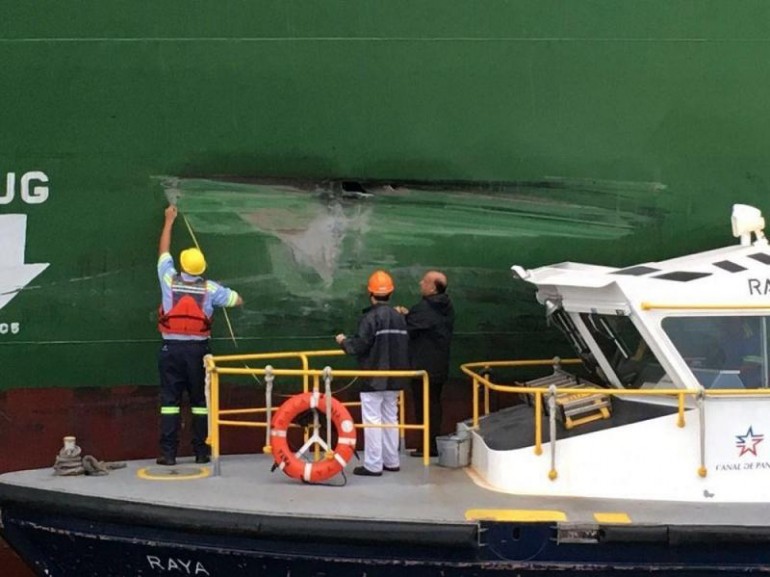
Cosco Shipping became the first neo-panamax vessel to traverse the newly expanded Panama Canal when Cosco Shipping Panama was pulled by tugboats through the new locks at Agua Clara. They’ve also received the dubious honor of having the first accident when Cosco Xin Fei Zhou scraped the wall as it navigated through the locks on July 24th. The 8,500 TEU Xin Fei Zhou hit a wall in the Agua Clara docks on the Atlantic side of the canal during a northbound trip. Though the ship suffered a three meter gash, the canal only had minor damage and traffic was unaffected. The accident wasn’t entirely unexpected. The new canal uses fore and aft tugboats to navigate the massive ships through the locks and some environmental concerns, namely high winds, may compromise vessel stability. A study from the International Transport Workers’ Federation determined that the safety and maneuverability may be at risk but was dismissed by the panama Canal Authority for a lack of “scientific accuracy and credibility.” The study was conducted by Brazil’s Fundação Homem de Mar (FHM), and used mathematical conclusions derived from simulations created using a scale model of the new locks, a typical neo-Panamax vessel and the planned configuration of two tugboats under various environmental conditions. The ITF concluded that the safety of maneuverability within the locks is compromised due to several factors, namely: The locks’ dimensions are too small for safe operation (with both gates closed); There are no refuge areas for the tugboats inside the locks, leaving no room for failure (human error, miscommunication, broken lines or engine failure); The bollard pull is insufficient; In terms of maneuverability in the locks, the control of the vessel was compromised under the average environmental conditions present in that geographic area (data provided by the contracting party). The main reasons were the low power of the tugboats and the required bollard pull. With milder conditions the exercise was concluded safely.
